
Orange County Property Tax Records
Orange County property tax records are public documents covering hundreds of thousands of parcels in one of Florida's largest and fastest-growing counties. The Orange County Property Appraiser and Tax Collector maintain these records for all real property and tangible personal property in the county, from urban condominiums in downtown Orlando to residential subdivisions in unincorporated areas like Alafaya and Pine Hills. This page explains how to access those records, how assessments work, and what property owners need to know about exemptions and tax payments.
Orange County Quick Facts
Orange County Property Appraiser
The Orange County Property Appraiser's office is located at 200 S. Orange Avenue, Suite 1700, Orlando, FL 32801. The main phone number is (407) 836-5044, and the fax is (407) 836-5944. The office values all real and personal property in Orange County as of January 1 each year. That assessed value is the basis for every property tax bill in the county. The appraiser does not set tax rates and does not collect taxes, those are separate functions handled by the county commission, school board, special districts, and the tax collector.
Orange County has one of the largest and most complex property rolls in Florida. The county includes the city of Orlando, dozens of other municipalities, and large unincorporated areas. The property mix spans residential neighborhoods, resort hotels, theme park properties, commercial corridors along major highways, industrial parks, and agricultural land. The appraiser tracks sales across all these market segments to set values that reflect local market conditions, following mass appraisal standards required by Chapter 193, Florida Statutes.
Parcel records are available online at the Orange County Property Appraiser website. The search tool lets you find parcels by owner name, address, or parcel identification number. Results include current and prior-year assessed values, taxable value, exemption detail, sales history, and aerial maps.
The Orange County Property Appraiser's website is the primary tool for parcel lookups and property data in the county.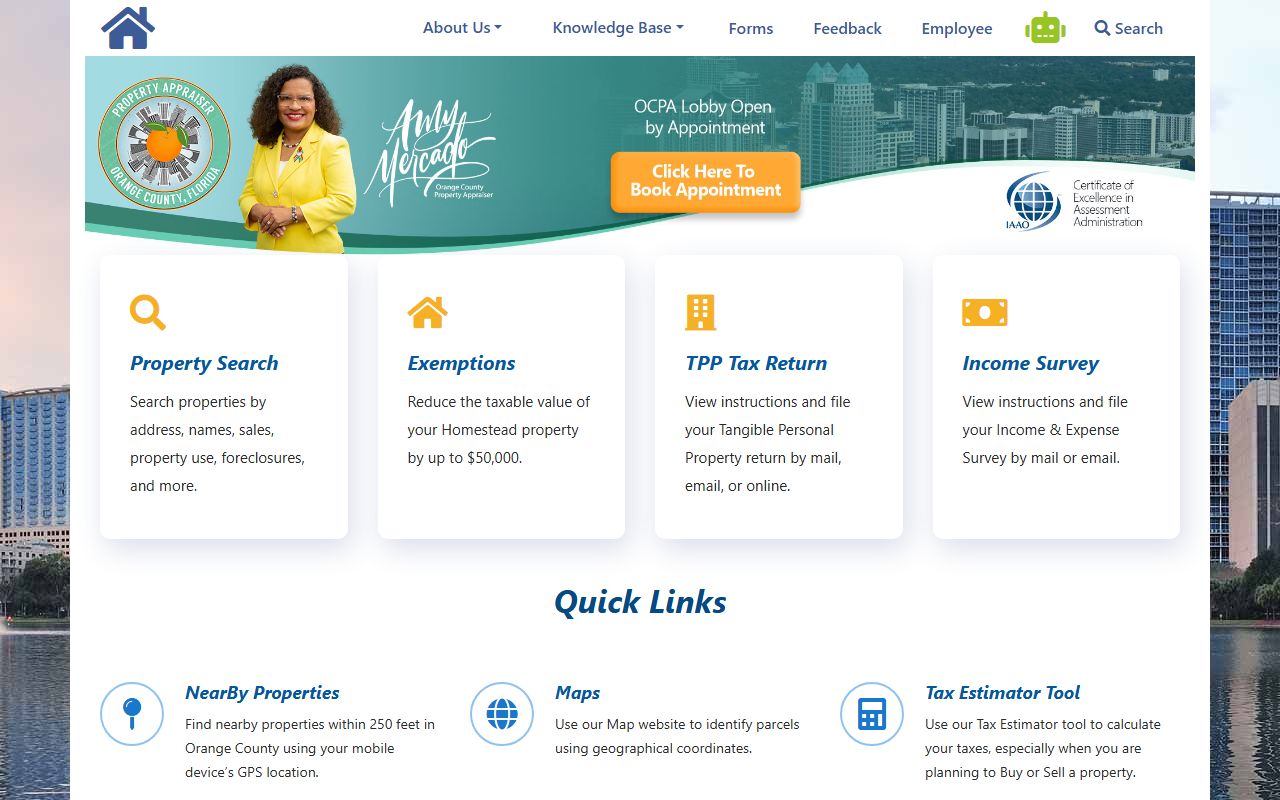
The OCPA site covers all parcel types across Orange County, including the unincorporated communities of Alafaya and Pine Hills.
The Florida Department of Revenue oversees all county appraisers and reviews the tax roll each year. You can find statewide guidance at the DOR Property Tax Oversight page.
Homestead Exemption in Orange County
Florida's homestead exemption reduces the assessed value of a primary residence by up to $50,000 for tax purposes. The first $25,000 applies to all taxing authorities. The second $25,000 applies only to non-school levies. You must file with the Orange County Property Appraiser by March 1 of the tax year. New homeowners who close on a home in Orange County should apply as soon as possible after closing to make sure they do not miss the next March 1 deadline. Applications can be filed online through the OCPA website, in person at 200 S. Orange Avenue, Suite 1700, or by mail.
The Save Our Homes cap is a critical benefit for Orange County homeowners with homestead status. Florida law limits the annual increase in assessed value to the lesser of 3% or the Consumer Price Index change. In a county where property values have risen sharply over recent years, this cap can mean a significant difference between your assessed value and the current market value of your home. That gap is your SOH benefit, and it is portable. When you sell and buy a new Florida home, you can carry up to $500,000 of that accumulated benefit to the new property to reduce your assessed value there.
Other exemptions available in Orange County include the widow/widower exemption, the disability exemption for permanently and totally disabled persons, and full exemptions for certain veterans. Senior citizens meeting income thresholds may qualify for additional relief. All exemptions are governed by Chapter 196, Florida Statutes. The OCPA website has exemption guides and online applications for most of these programs.
Tax Billing and Collection
The Orange County Tax Collector handles billing and payment. The mailing address is P.O. Box 545100, Orlando, FL 32854, and the phone number is (407) 845-6200. Tax bills are mailed in November. They reflect the taxable value set by the appraiser multiplied by the combined millage rates from the county, the school board, and any special districts covering that parcel. Orange County has multiple taxing authorities, including the city of Orlando for parcels within city limits and various special districts that cover services like fire, stormwater, and mosquito control.
Florida's early-payment discounts apply in Orange County: 4% in November, 3% in December, 2% in January, 1% in February. Taxes not paid by March 31 become delinquent on April 1. The tax collector then begins the tax certificate process under Chapter 197, Florida Statutes. Investors bid on certificates at a public sale, and if the property owner does not redeem the certificate within two years, a tax deed application can follow. It is rare for primary residences to go through the full tax deed process, but delinquent taxes should not be ignored.
Orange County taxes can be paid online through the tax collector's website, by mail, or in person at service centers throughout the county. The collector's office also handles installment plans for qualifying taxpayers who apply before April 30 of the prior year. The plan splits the annual bill into four payments.
Tangible Personal Property in Orange County
Businesses operating in Orange County must file a Tangible Personal Property return with the Property Appraiser by April 1 each year. TPP covers business assets not attached to real estate: furniture, fixtures, equipment, computers, machinery, and similar items. The first $25,000 in assessed value is exempt, but only if you file a return. Late filers lose the exemption and may face a penalty based on the percentage of value found after the deadline.
Orange County has a large and varied business base that includes theme parks, hotels, convention facilities, restaurants, retail operations, and professional offices. All of these businesses have TPP filing obligations regardless of size. The OCPA website has TPP forms and filing guides. You can also download standardized forms from the Florida DOR forms page. New businesses must file in their first year even if their total assets are below the $25,000 exemption threshold.
Value Adjustment Board Appeals
Orange County property owners who disagree with their assessed value can appeal to the Value Adjustment Board. You must file a petition within 25 days of the mailing date on your TRIM notice. The TRIM notice arrives each August and shows the proposed assessed value, any exemptions, and estimated taxes from each taxing authority. It is not a bill, it gives you time to review and act before the November tax bill is finalized.
The Orange County VAB uses special magistrates to hear appeals. Most hearings cover residential and commercial assessments. You can represent yourself or hire an attorney or licensed appraiser. Bring comparable sales data for similar Orange County properties, a private appraisal, or records showing errors in the appraiser's property description or condition rating. The magistrate weighs your evidence against the appraiser's data and issues a recommendation. The VAB then issues a final order. The full process is in Chapter 194, Florida Statutes.
If you do not agree with the VAB decision, you can appeal to the Ninth Judicial Circuit Court. That step involves additional filing fees and is generally pursued for higher-value properties where the potential tax savings justify the cost.
Public Records and Data Access
Orange County property records are public under Chapter 119, Florida Statutes. Core parcel data is available online through the OCPA website at no cost. For bulk downloads, the Florida DOR's data portal provides full county assessment rolls for download by tax year. This is useful for researchers, real estate professionals, and anyone who needs data on many Orange County parcels at once.
Download the full Orange County assessment roll from the Florida DOR data portal by selecting the county and tax year.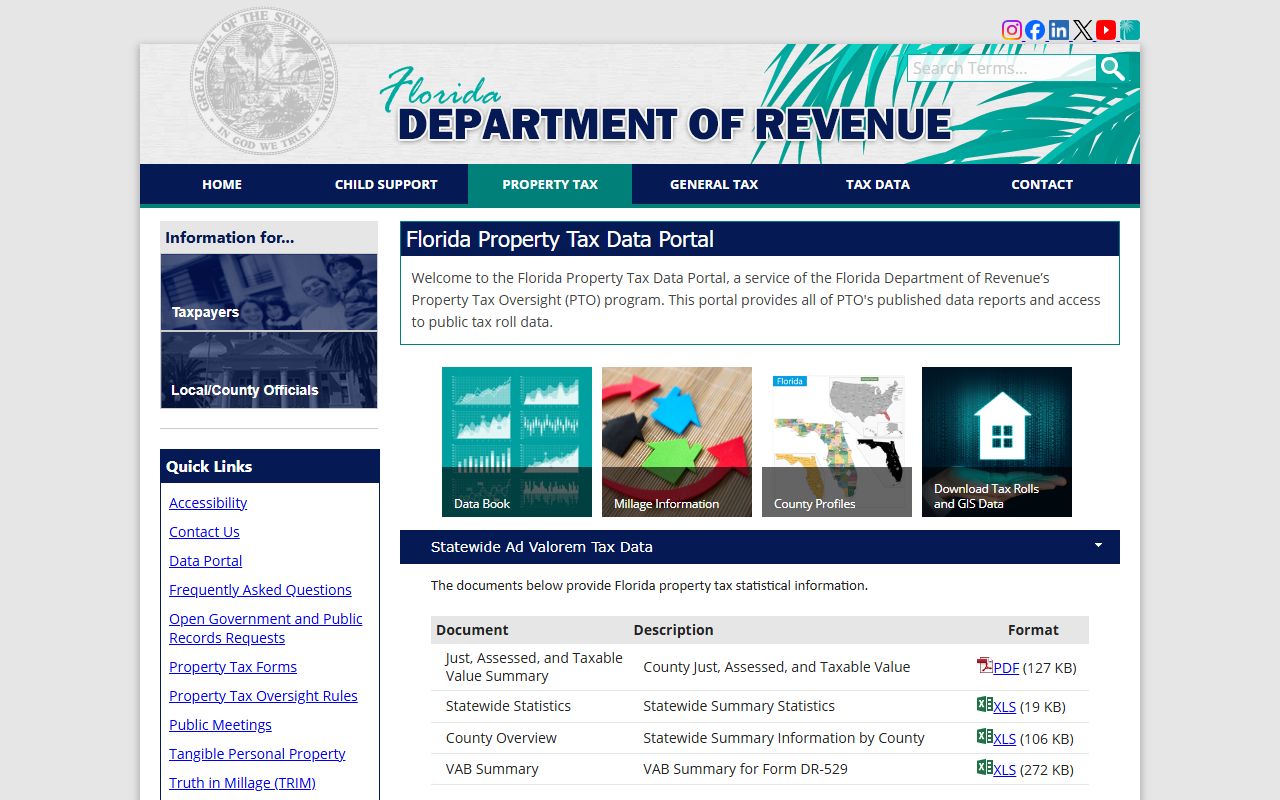
The DOR data portal is free to use and provides current and historical data for Orange County and all other Florida counties.
The Property Appraisers Association of Florida and the Florida Tax Collectors Association both maintain directories of county offices for anyone needing to find contact information across the state.
Additional Resources for Orange County Property Owners
The Florida DOR property tax FAQ covers common questions about assessment, exemptions, portability, and appeals. The Orange County Property Appraiser's website also has detailed guides on homestead exemption filing, TPP requirements, and how to read your TRIM notice. These resources help you understand the process whether you are a first-time homeowner or a long-time property owner with questions about your assessment.
For questions about a specific parcel in Orange County, its assessed value, exemptions, or ownership history, the OCPA online search is the fastest starting point. For help with exemption applications or to understand your appeal options, call the appraiser's office at (407) 836-5044 during business hours.
Download exemption applications and property tax forms from the Florida DOR forms page, which includes forms used in Orange County.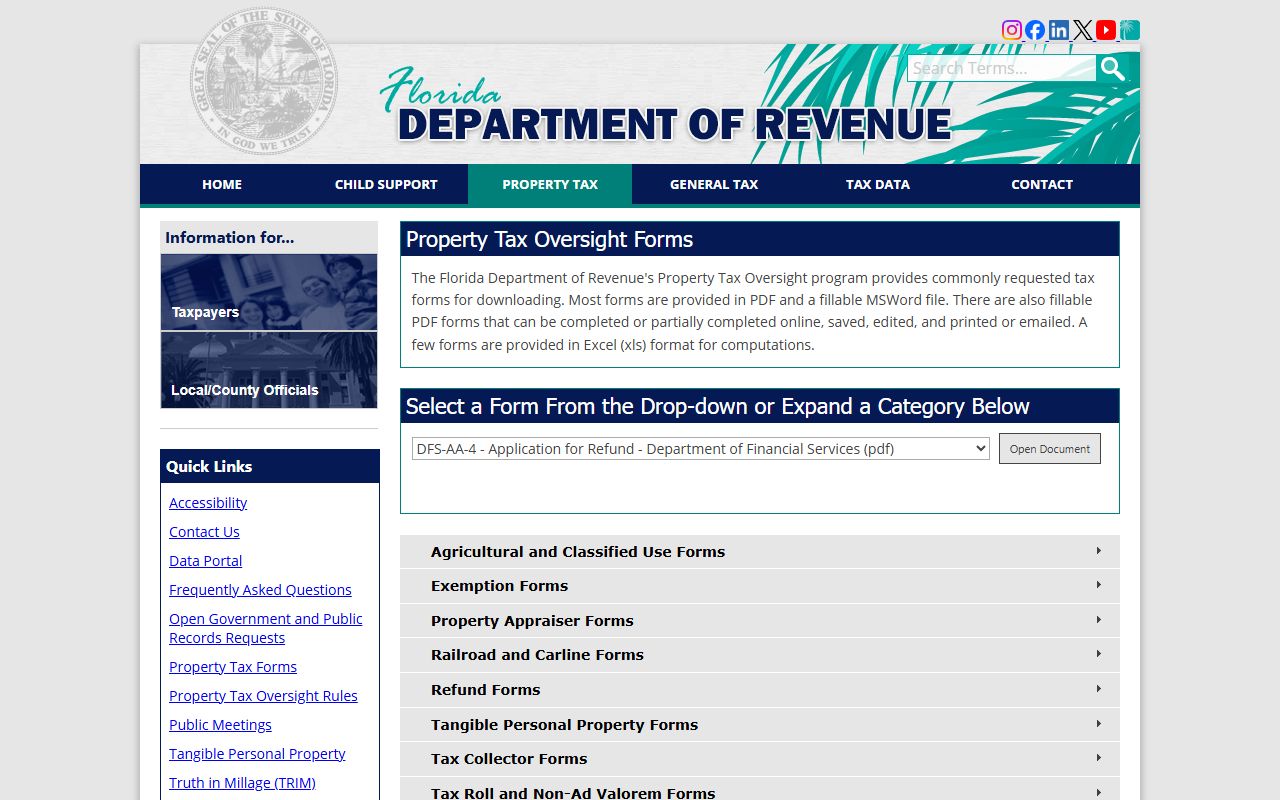
Most Florida property tax forms are standardized statewide, so the DOR forms page is a reliable source for Orange County property owners and businesses.
Cities in Orange County
Orange County includes several large communities with their own property tax implications.
Alafaya and Pine Hills are unincorporated communities within Orange County. Their property records are maintained by the Orange County Property Appraiser at 200 S. Orange Avenue, Suite 1700, Orlando.