
Alafaya Property Tax Records
Property tax records for Alafaya, Florida are administered by Orange County, since Alafaya is an unincorporated community in eastern Orange County. The Orange County Property Appraiser and Tax Collector, both based in Orlando, handle all assessment and collection work for Alafaya parcels. This guide covers where to search records, what exemptions are available, how to appeal a value, and what happens if taxes go unpaid.
Alafaya Quick Facts
Orange County Property Tax Administration
Alafaya is unincorporated, meaning it has no city government of its own. Property taxes here are handled entirely by Orange County. The Orange County Property Appraiser values all parcels in the county, and the Orange County Tax Collector bills and collects. Orange County is one of the largest counties in Florida, with hundreds of thousands of parcels and a fast-growing population. Alafaya, on the eastern edge of the county near the University of Central Florida, is a significant residential community within that larger whole.
Because Alafaya is unincorporated, Alafaya property owners do not pay a city millage rate. Bills include Orange County general, school board, water management, and other district levies, but no city component. This can make total tax bills somewhat lower than they would be for comparable properties inside an incorporated city in Orange County. That said, the appraiser values unincorporated and incorporated parcels using the same standards under Florida law.
All property in Orange County is assessed as of January 1 each year. The Florida Department of Revenue sets the methodology. Market sales and property characteristics drive annual value changes. The DOR Property Tax Oversight page explains how this works statewide. Assessment rules are in Chapter 193, Florida Statutes. Collection rules are in Chapter 197.
Orange County Property Appraiser
The Orange County Property Appraiser office is at 200 S. Orange Ave., Suite 1700, Orlando, FL 32801. Phone: (407) 836-5044. The Orange County Property Appraiser website is where you search for any parcel in the county, including all Alafaya properties. Search by address, owner name, or parcel ID. The search is free and open to the public without a login.
A parcel record shows the just value, assessed value, taxable value, land and building data, sales history, and any exemptions on file. The parcel ID is the most efficient search method. If you do not have it, an address search works well for most Alafaya parcels. The site also has GIS mapping tools, aerial imagery, and neighborhood sales data that can help you understand how your value was determined.
The appraiser's office follows mass appraisal methods reviewed annually by the DOR. Values are based on market sales of comparable properties rather than individual property inspections each year. For a fast-growing area like Alafaya, where new development has been active, values can change significantly from one year to the next as the sales base shifts.
The main office is in downtown Orlando. In-person service is available during normal business hours. Phone and online contact are available for most routine questions about exemptions, TRIM notices, and assessment data.
The Florida DOR contact page lists direct contact information for the Orange County Property Appraiser in Orlando.
The DOR contact page provides verified contact details for the Orange County Property Appraiser office that serves Alafaya.
Orange County Tax Collector
The Orange County Tax Collector mailing address is P.O. Box 545100, Orlando, FL 32854. Phone: (407) 845-6200. The collector handles billing and payment for all Orange County property taxes, including every parcel in Alafaya. Bills go out in November. Florida's discount schedule applies: 4% if paid in November, 3% in December, 2% in January, and 1% in February. After March 31, taxes are delinquent under Chapter 197, Florida Statutes.
Orange County has physical service centers around the county for in-person payment and assistance. Online payment is available through the collector's website and is often the fastest option for Alafaya residents who do not want to travel into downtown Orlando. The site accepts credit cards and e-checks. Mail payment is also accepted. An installment plan lets you pay quarterly if you prefer to spread costs throughout the year. Sign up in the spring before the tax year begins.
The collector's online lookup tool shows current balances, prior-year bills, and payment history. If you are buying a property in Alafaya, checking the collector's database confirms whether any taxes remain outstanding on the parcel and whether a tax certificate has been issued. Delinquent tax certificates held for two years can lead to a tax deed application and potential forced sale of the property.
How to Search Alafaya Property Tax Records
Start at the Orange County Property Appraiser site. Enter the property address or parcel ID to pull up a record. Review the just value, assessed value, taxable value, exemptions, land and building data, and sales history. Free and open to all. No login required.
For billing and payment data, go to the Orange County Tax Collector's site. Search by parcel ID or address to see the current bill, balance due, and prior payment history. These two databases together give a complete tax snapshot of any Alafaya parcel.
All records are public under Chapter 119, Florida Statutes. No ID is needed. No reason is required. Certain exemption application fields are confidential, but all core assessment and billing data is open. The Florida DOR also maintains a statewide property data portal with downloadable county-level data files for bulk research.
All standard Florida property tax forms, including homestead exemption applications, are on the DOR forms page.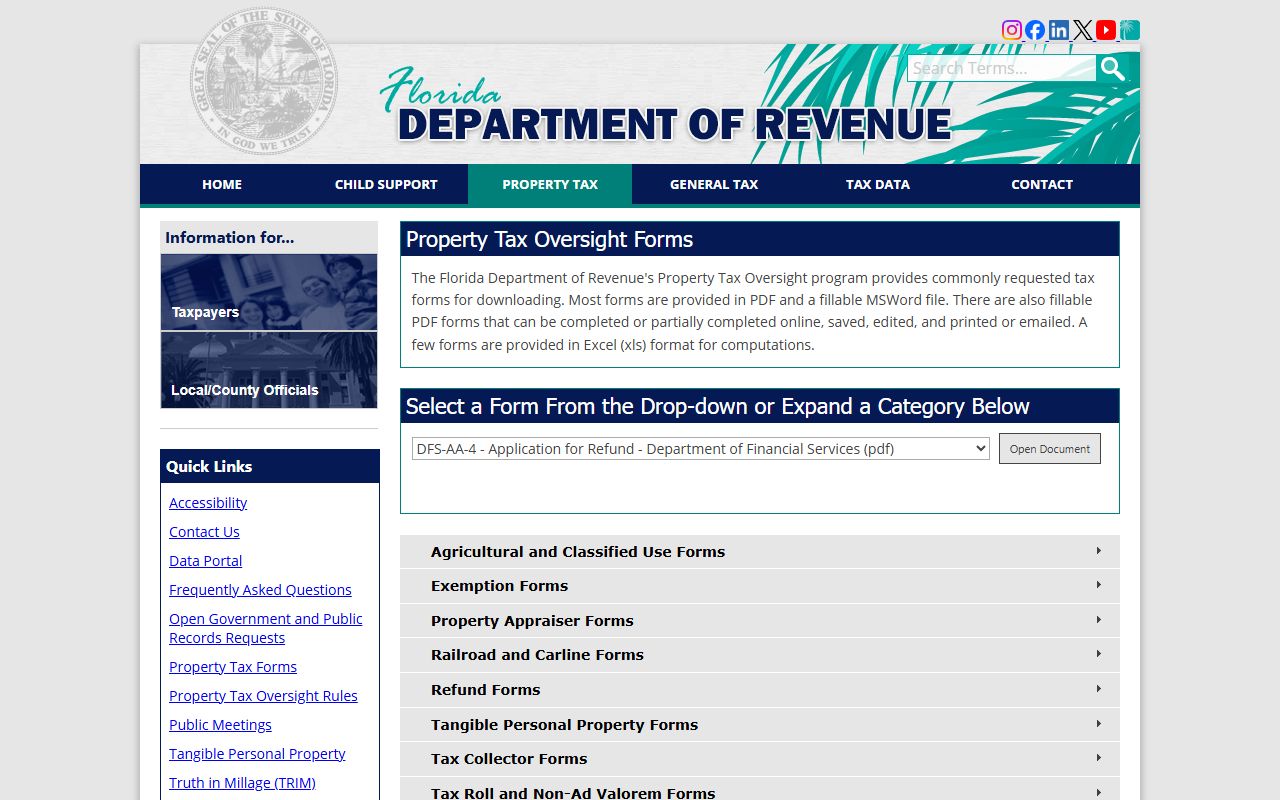
Download the homestead exemption application and portability form for Orange County directly from the DOR forms portal.
Property Tax Exemptions for Alafaya Residents
Florida exemptions apply to all qualifying Alafaya properties. The homestead exemption is the most widely used. It reduces assessed value by up to $50,000 on a primary residence. The first $25,000 applies against all taxing authorities. The second $25,000 applies to value between $50,000 and $75,000 and covers all authorities except schools. On a typical Alafaya home, this translates to savings of several hundred dollars per year.
Homestead also activates the Save Our Homes cap, which limits annual assessed value increases to 3% or the rate of inflation, whichever is lower. In a growing area like Alafaya, where new residents and development have pushed prices up, this cap is especially valuable for long-term owners. Portability allows you to transfer your accumulated SOH benefit to a new Florida home when you sell your Alafaya property.
Other exemptions include the senior low-income exemption, disability exemptions, veteran exemptions, and the widow or widower exemption. Each requires a separate application. File with the Orange County Property Appraiser by March 1 of the tax year. Late applications are not accepted. All exemption rules are in Chapter 196, Florida Statutes.
Business owners in Alafaya with tangible personal property, including equipment, furniture, and fixtures, should file a TPP return with the property appraiser by April 1 to claim the $25,000 TPP exemption. Miss the deadline and the exemption is forfeited for that tax year.
VAB Appeals for Alafaya Property Owners
If your Orange County assessed value seems too high, Florida law gives you a formal appeal process. The property appraiser mails a TRIM notice each August with the proposed value for the coming tax year. You have 25 days from that mailing to file a petition with the Orange County Value Adjustment Board.
The VAB is independent of the property appraiser. A special magistrate hears each case. You present your evidence: comparable sales, photos of property condition, or an independent appraisal. The the appraiser presents theirs. The magistrate makes a recommendation and the board votes on it. The burden of proof is on you to show the value is wrong. Chapter 194, Florida Statutes governs the entire process. If the VAB does not rule in your favor, you can still appeal in circuit court. Pay the non-disputed portion of your tax bill while the appeal is open to avoid delinquency penalties.
Payment and Delinquency
Orange County tax bills arrive in November. Pay by March 31 to stay current. The November discount of 4% is the best deal. Each month after that, the discount decreases by one point. After March 31, the bill is delinquent. Delinquent taxes go into a certificate sale in June. Certificates not redeemed within two years allow the investor to seek a tax deed, which can lead to forced sale of the property. Paying on time avoids the certificate process entirely.
The Orange County Tax Collector accepts online payment, mail payment, and in-person payment at service centers around the county. An installment plan is available for those who want to pay quarterly. The Florida Tax Collectors Association has general information about the collection process statewide.
Public Records Access
Florida's public records law, Chapter 119, makes all property tax records open to everyone. No reason is required to access them. No residency requirement applies. The Orange County Property Appraiser and Tax Collector websites handle the vast majority of requests for free. For records not available online, contact the offices directly. They may charge for copies or staff time, but the records themselves are public. For more on Orange County tax administration, see the Orange County property tax records page.