
Lake County Property Tax and Assessment Records
Lake County property tax records are kept by two separate offices: the Property Appraiser, who determines assessed values, and the Tax Collector, who sends bills and processes payments. Lake County is one of Central Florida's faster-growing counties, with a mix of residential communities, retirement developments, and agricultural land. This guide covers how to search parcel records, understand your assessment, apply for exemptions, and access public tax data for any property in Lake County.
Lake County Quick Facts
Lake County Property Appraiser
The Lake County Property Appraiser is located at 320 West Main Street, Tavares, FL 32778. Phone is (352) 343-9600 and fax is (352) 343-9696. The office website at lakecopropappr.com provides the primary parcel search tool. The appraiser is elected by Lake County voters and operates independently from county government. Every year, the office values all real property and tangible personal property in the county as of January 1.
Lake County's property base spans a wide range. You have dense residential subdivisions in the south near the Orange County line, active adult communities around Lady Lake and The Villages (which extends into Lake County), lakefront properties throughout, agricultural parcels in the north, and commercial corridors along US-27 and US-441. The appraiser values all of these using Florida's mass appraisal standards, cross-referencing recent sales, cost data, and income information as each property type requires.
Each August, TRIM notices go out to every property owner in Lake County. That notice shows your proposed assessed value and the proposed tax rates from each taxing authority, including the county, the school board, municipalities, and special districts. It is not a tax bill. It is a preview, and the 25-day window after the mailing date is your chance to raise any concerns before the roll is certified.
The Lake County Property Appraiser's website provides a full parcel search system and assessment data for Lake County properties.
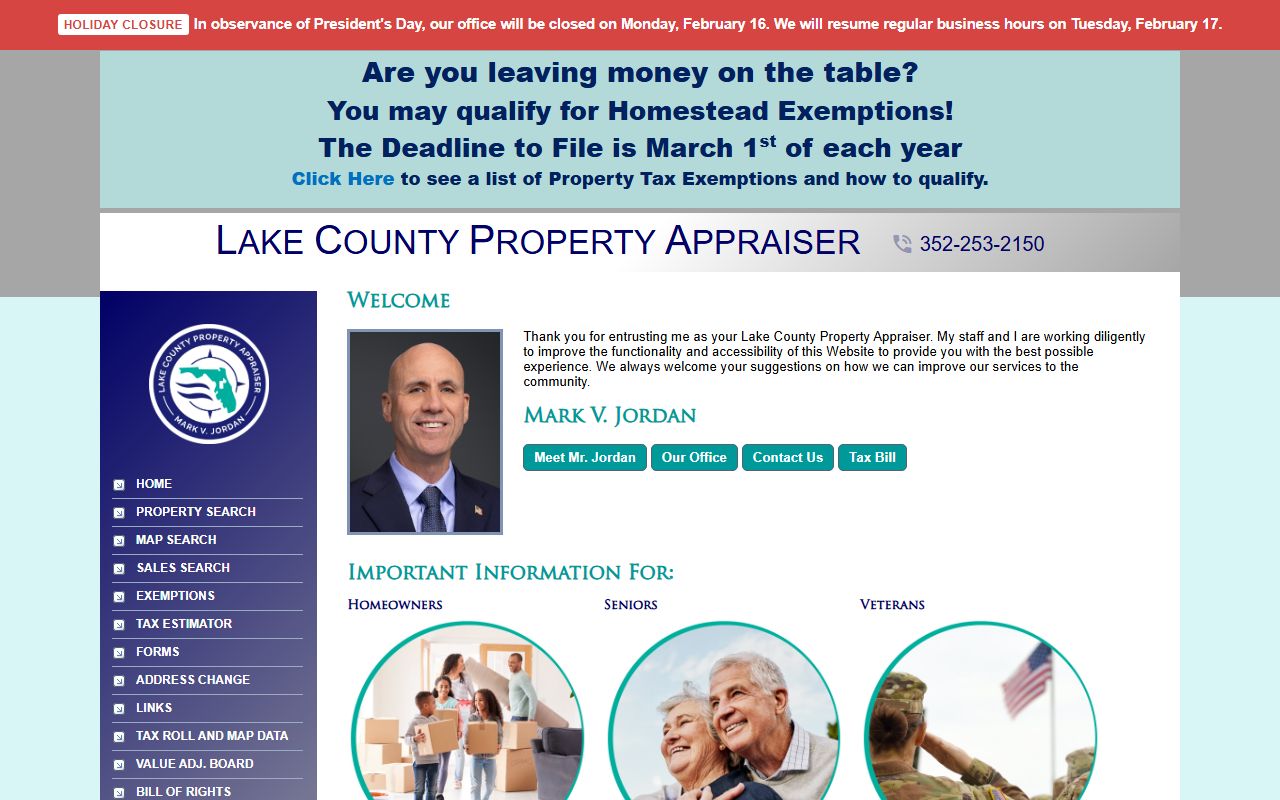
Use the portal to search by parcel ID, owner name, or address and access current assessment data, sales history, and exemption information.
Lake County Tax Collector
The Lake County Tax Collector shares the same primary address: 320 West Main Street, Tavares, FL 32778, phone (352) 343-9600. The Tax Collector is a separate elected official who takes over after the appraiser certifies the tax roll each October. Bills go out by November 1. The collector maintains additional service locations across the county to accommodate Lake County's growing and spread-out population.
Pay early to save money. November brings a 4% discount on your total tax bill. December drops to 3%, January to 2%, and February to 1%. After March 31, the bill is delinquent. The collector begins the certificate sale process for unpaid accounts. That sale typically runs in late May or early June. Investors pay the overdue taxes in exchange for a lien on the property.
Lake County offers online payment through the Tax Collector's website. You can also pay in person at any service center location or by mail. For owners with larger bills or multiple properties, an installment plan is available. Apply by April 30 to split your annual obligation into four quarterly payments. The Florida Tax Collectors Association at floridataxcollectors.com explains the statewide rules that govern these options.
Searching Lake County Tax Records Online
The Property Appraiser's portal at lakecopropappr.com is free and requires no account. Search by owner name, street address, or parcel ID number. The parcel ID is a unique identifier that stays with the land through all ownership changes. It is the most precise way to pull up a specific record.
Each parcel record shows the current assessed value, land and improvement breakdown, legal description, recent sales history, and exemption information. In a growing county like Lake, sales data is particularly active. The appraiser uses that data to set values for similar properties throughout each neighborhood and property class. If you see a value that seems out of line with recent sales in your area, pull those comparable sales and review the methodology.
Tax payment history, current bills, and delinquent account information are held by the Tax Collector. Contact that office directly or check their website for the current year's bill status. If you are purchasing property in Lake County, confirm that all taxes are current and that no certificates have been issued. A title search should reveal this, but direct verification with the collector is a sound extra step.
All Lake County property tax records are public under Chapter 119, Florida Statutes. You can access assessed values, ownership data, sales history, and exemption types at no cost. Social Security numbers, income data, and certain other information submitted with exemption applications are confidential by law.
Exemptions for Lake County Property Owners
The homestead exemption is the most valuable tax break for most Lake County homeowners. It removes up to $50,000 from your taxable assessed value. The first $25,000 applies to all taxing authorities. The second $25,000 covers non-school levies on value between $50,000 and $75,000. You must own and occupy the home as your primary Florida residence on January 1 and file by March 1 with the Property Appraiser.
With homestead comes the Save Our Homes cap. Your assessed value can rise no more than 3% per year, or the change in the Consumer Price Index, whichever is less. In a fast-growing county like Lake, where market values have climbed sharply in recent years, the cap provides real protection. Long-time homeowners may find their assessed values significantly below current market. New buyers, who lose the cap on purchase, often see their first tax bill come in well above what the prior owner paid. Chapter 193, Florida Statutes governs both the cap and portability rules for moving the accumulated benefit to a new homestead.
Lake County also processes exemptions for widows and widowers, veterans, people with permanent disabilities, and low-income seniors. The senior exemption has income limits and may vary by taxing district. Businesses must file a tangible personal property return by April 1 each year to maintain the $25,000 TPP exemption. The Villages area, which crosses into Lake, Sumter, and Marion counties, requires some property owners to check which county's office handles their parcel. Full exemption rules are in Chapter 196, Florida Statutes.
Appealing a Lake County Assessment
Think your value is too high? Start with the Property Appraiser's office. Call or visit and request an informal review. Bring evidence: comparable sales in your area, a private appraisal, or any condition issues that the current property record does not capture. The appraiser's staff reviews the evidence and can correct errors or adjust values without a formal petition.
If that conversation does not resolve it, file a VAB petition. The deadline is 25 days after the TRIM notice mailing date in August. Do not miss it. The Value Adjustment Board in Lake County follows the same state process as every other county. A special magistrate hears the case, reviews the comparable sales and evidence from both sides, and issues a recommendation. The board then acts on that recommendation.
Chapter 194, Florida Statutes lays out the petition requirements, hearing rules, and standards of proof. You still owe your taxes by March 31 even during an appeal. If the VAB lowers your value, a refund follows. If you are still not satisfied after the VAB, circuit court is the next step, though that requires more time and typically an attorney.
The Florida Department of Revenue's FAQ page covers common questions about assessments, appeals, and exemptions that apply in Lake County and across the state.
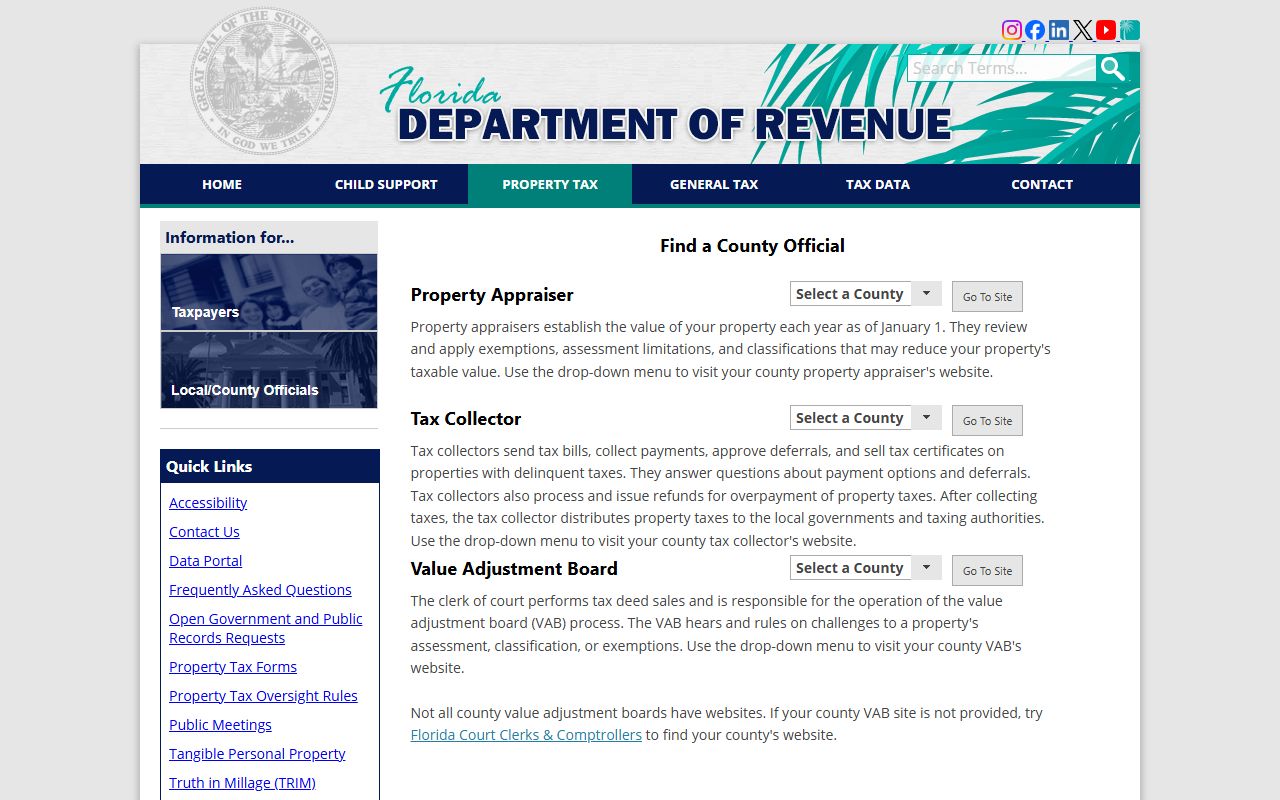
Review that page for answers to common questions about the assessment process, exemption eligibility, and how to find your county's offices.
Tax Payments, Delinquency, and Certificates
Lake County tax bills are due by March 31. Pay in November to save 4%. Every month after that, the discount drops by one point. After March 31, the tax is delinquent. No additional time is given. The Tax Collector moves to a certificate sale in May or June. Investors at that sale pay the outstanding amount. The property owner then owes the investor the redemption cost to clear the lien.
Unredeemed certificates accumulate interest. After two years, the certificate holder can apply for a tax deed. That process can end in a forced public sale of the property. It is a consequence that takes time to unfold, but it happens. If you have received delinquency notices, contact the Tax Collector immediately. The earlier you act, the fewer costs you face.
Chapter 197, Florida Statutes governs the full process: certificate sales, interest rates, redemption rights, and tax deed applications. Mortgage lenders typically pay from escrow, but verify your tax payment every year. Escrow account errors are not rare, and the legal obligation to pay remains with the property owner regardless of the lender's actions.
Public Records Access
Florida's Chapter 119 guarantees broad public access to government records. Lake County property tax records are available to anyone. Assessed values, ownership data, sales history, legal descriptions, and exemption types are all searchable online at no cost through the Property Appraiser's portal. The Tax Collector's payment records are also publicly accessible.
For bulk data, the Florida Department of Revenue maintains a statewide data portal at floridarevenue.com/property/Pages/DataPortal.aspx with downloadable assessment rolls. Lake County data is included. Researchers, investors, and real estate professionals use this portal to analyze assessment trends and compare values across the county. The Professional Association of Appraisers of Florida at paaf.us provides further resources on appraisal methodology and property tax law in Florida.
Cities in Lake County
Lake County includes Leesburg, Clermont, Eustis, Tavares (county seat), Mount Dora, Groveland, and parts of The Villages. Clermont has grown rapidly in recent years and is approaching 40,000 residents. Leesburg has around 25,000. None of the communities in Lake County exceed 75,000 in population, so no city-level property tax pages are available at this time.