
Search Citrus County Property Tax Records
Citrus County property tax records are split between two elected offices in Inverness: the Property Appraiser, who assesses every parcel in the county each year, and the Tax Collector, who sends bills and receives payments. Whether you own a home on the Withlacoochee River, a commercial property in Crystal River, or vacant land in the county's interior, this page explains how to find assessment data, search tax records, apply for exemptions, and understand the payment process for Citrus County.
Citrus County Quick Facts
Citrus County Property Appraiser
The Citrus County Property Appraiser is located at 210 N. Apopka Avenue, Suite 100, Inverness, FL 34450. Phone: (352) 341-6500. Fax: (352) 341-6513. The office online is at citruspa.org. The property appraiser is an elected official who values all real and personal property in Citrus County as of January 1 each year. That single date is set by state law and does not shift based on when you buy, sell, or renovate.
The appraiser's responsibilities cover a wide range of property types: single-family homes, condominiums, commercial buildings, agricultural land, mobile homes, and tangible personal property used in business. Each parcel gets assessed based on sales of similar properties, income potential (for commercial), and cost approaches. The appraiser's office must certify the county's tax roll by October 1 each year so the Tax Collector can send bills.
In August, the appraiser mails TRIM notices, Truth in Millage, to every property owner. This is not a tax bill. It is a proposed value statement showing the assessed value, any exemptions, and the tax rates proposed by each taxing body. It is the owner's chance to review and challenge the numbers before they become final for the year.
The Citrus County Property Appraiser's website allows parcel searches by address, name, or parcel ID and shows full assessment histories.
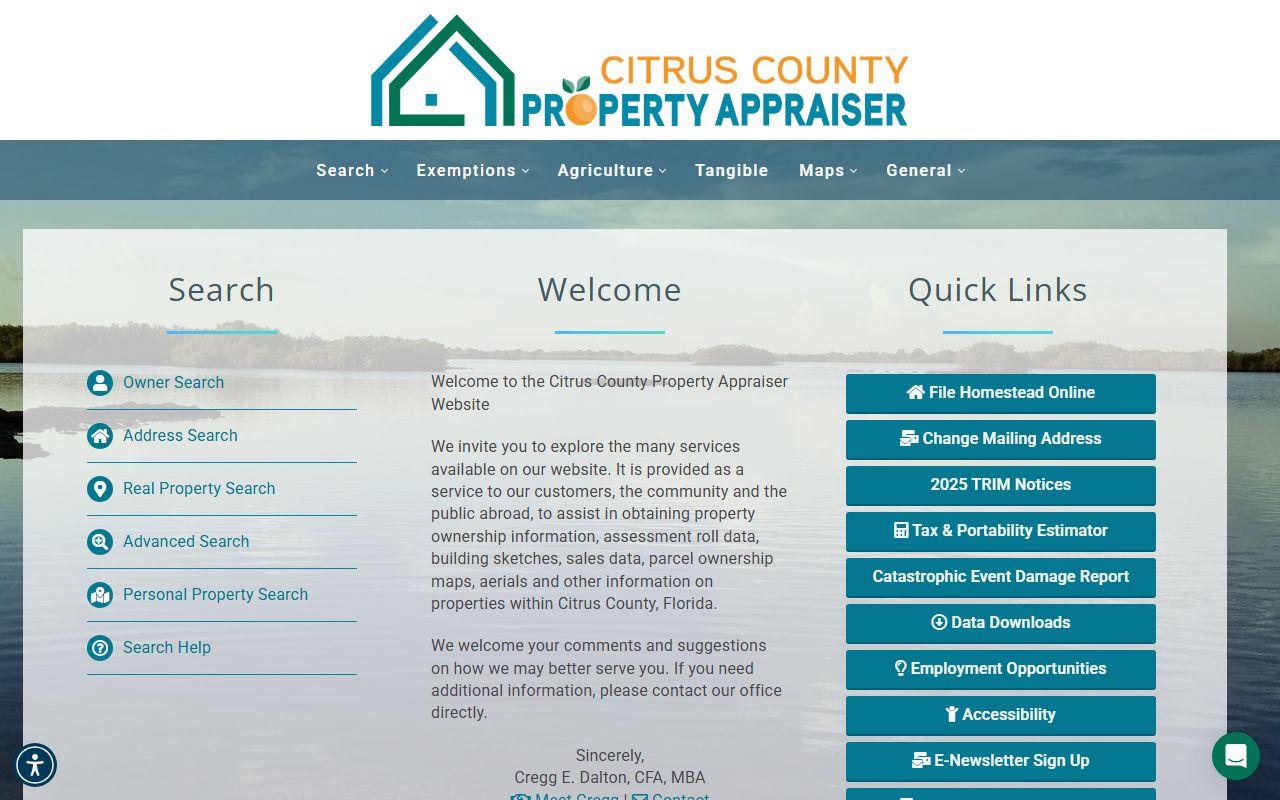
The site also includes maps, aerial imagery, and building sketches tied to each parcel record.
Citrus County Tax Collector
The Citrus County Tax Collector shares the same building: 210 N. Apopka Avenue, Suite 100, Inverness, FL 34450. Phone: (352) 341-6500. The collector is a separate elected official. Once the appraiser certifies the tax roll, the collector takes on the job of billing and collecting. Annual tax bills go out by November 1 and are due March 31. Pay on time, and you are done. Let the date pass, and the process gets more complicated.
Florida's early-payment discount system rewards prompt payers. Four percent off in November, 3% in December, 2% in January, and 1% off in February. After March 31, the account is delinquent. Tax certificate sales happen each spring for unpaid accounts. Those certificates carry interest, and the underlying property faces a potential tax deed process if the certificates go unredeemed long enough.
The Tax Collector also handles installment plans, motor vehicle registrations, and hunting and fishing licenses. For property tax purposes, the core function is collecting the annual bill and keeping payment history. If you need to know your current balance or whether last year's taxes were paid, the Tax Collector's office is the right call.
Note: Any questions about your property's assessed value or exemption status belong at the Property Appraiser's office, not the Tax Collector. The two offices serve different roles.
How to Search Citrus County Property Tax Records
The Property Appraiser's website at citruspa.org is the primary tool for parcel searches. You can look up any property by street address, owner name, or parcel identification number. The parcel ID is the most precise search method, no address formatting issues, no duplicate names to sort through. If you have the PIN, use it.
Each result shows the property class, land use code, assessed value, taxable value, exemptions, legal description, and sales history. The site usually includes a building sketch, aerial photo, and a breakdown of the improvement value by structure type. Most of this data goes back at least five years, which lets you track how values have changed over time in different parts of the county.
For tax payment records, switch to the Tax Collector's system. You can search there by parcel number or property address to see current bills, prior payments, installment plan status, and any outstanding delinquency. All of this is public under Chapter 119, Florida Statutes. You do not need a reason to request property tax records, and you do not need to pay to view most of what is online.
The Florida Department of Revenue's data portal provides bulk access to county assessment rolls statewide. Researchers and data users can download Citrus County property data through floridarevenue.com/property/Pages/DataPortal.aspx.
Property Tax Exemptions in Citrus County
The homestead exemption is the biggest tax break available to Citrus County homeowners. It removes up to $50,000 from the assessed value used to calculate most tax levies. The first $25,000 applies across all taxing authorities, including schools. The second $25,000 only applies to non-school taxes, and it only kicks in if your assessed value exceeds $50,000. To qualify, you must be a Florida resident, own and occupy the home as your primary residence, and file with the Property Appraiser's office by March 1.
The Save Our Homes cap is tied to homestead status. Once you have homestead, the assessed value of your home can only rise by 3% or the annual change in the Consumer Price Index, whichever is lower. Over several years, this can create a significant gap between the assessed value and the actual market value. That gap, called portability, can be transferred to a new homestead in Florida if you move. Chapter 193, Florida Statutes governs assessment caps and portability rules.
Additional exemptions processed by the Citrus County Property Appraiser include the senior citizen low-income exemption, veteran disability exemptions, total and permanent disability exemptions, widow and widower exemptions, and exemptions for deployed military. Each has documentation requirements. The office can walk you through what is needed for each one.
Business owners should note the tangible personal property exemption. The first $25,000 of assessed TPP value is exempt, but you must file a return by April 1 to preserve eligibility. See Chapter 196, Florida Statutes for complete exemption rules.
Appealing Your Citrus County Property Assessment
If the value on your TRIM notice seems wrong, start by calling or visiting the Citrus County Property Appraiser's office. Bring evidence: a recent private appraisal, comparable sales data, photos of property condition problems, or documentation of any errors in the property record. Many value disputes get resolved at this informal stage without any further action needed.
If you cannot reach an agreement, file a petition with the Value Adjustment Board. The filing window opens after the TRIM notice goes out in August and closes 25 days after the notice mailing date. Missing that window means waiting until next year. The VAB is made up of elected officials and citizen members who hear tax disputes outside the appraiser's office.
A special magistrate reviews each petition and hears evidence from both sides. You need to show the appraiser's value is not supported by the market data. The process is less formal than circuit court, but you still need organized evidence to make your case. Chapter 194, Florida Statutes governs VAB procedures and property owner rights.
Winning at the VAB can result in a reduced assessment and a refund of any overpaid taxes. You still need to pay your taxes on time during the appeal. Not paying because of a pending VAB petition does not protect you from delinquency. Pay first, then fight the value.
Paying Citrus County Property Taxes
Bills go out November 1. They are due by March 31. That four-month window lets property owners choose when to pay. Early payment means a discount. Pay in full in November and get 4% off the total. Wait until February and you still get 1%. After March 31, the discount disappears and the account becomes delinquent.
The Tax Collector accepts online payments, mail payments, and in-person payments at the office in Inverness. Credit card payments may carry a convenience fee. Check and cash work in person. The installment payment plan lets you split the year's taxes into four quarterly payments, with an application deadline of April 30. The Florida Tax Collectors Association provides information about payment options and installment plans at floridataxcollectors.com.
Delinquent accounts enter the tax certificate process each spring. When a certificate sells, the investor pays the back taxes and earns interest. The property owner owes that investor redemption costs. If the certificate sits unpaid for two years, the holder can start the tax deed application process, which can eventually result in a forced sale. Chapter 197, Florida Statutes covers delinquency, certificates, and tax deed proceedings in full.
Property owners with mortgage accounts often have taxes paid from escrow. Even so, it is worth checking each year that the payment was actually made. The Tax Collector's records will show whether your account is current.
Citrus County Property Records and Public Access
Citrus County property tax records are public records. Florida's broad open records law, Chapter 119, Florida Statutes, presumes government records are open unless a specific statutory exemption applies. That means assessed values, owner names and mailing addresses, parcel legal descriptions, sales histories, exemption types, and tax payment records are all available to the public without requiring a stated reason.
Some data is protected. Social Security numbers, personal income information, and financial data submitted with exemption applications are confidential. The appraiser's records will show that an exemption exists and what type, but not the supporting financial documents used to qualify for it.
You can access most Citrus County property tax records online for free through the appraiser's and collector's websites. For copies or bulk data requests, contact the offices directly. The Florida Department of Revenue also offers a statewide FAQ resource at floridarevenue.com that answers common questions about property tax access and procedures. The Professional Association of Florida Appraisers at paaf.us provides additional context on how Florida's appraisal system operates.
The Florida Department of Revenue's Property Tax Oversight homepage explains the statewide framework that all county offices, including Citrus County, operate within.
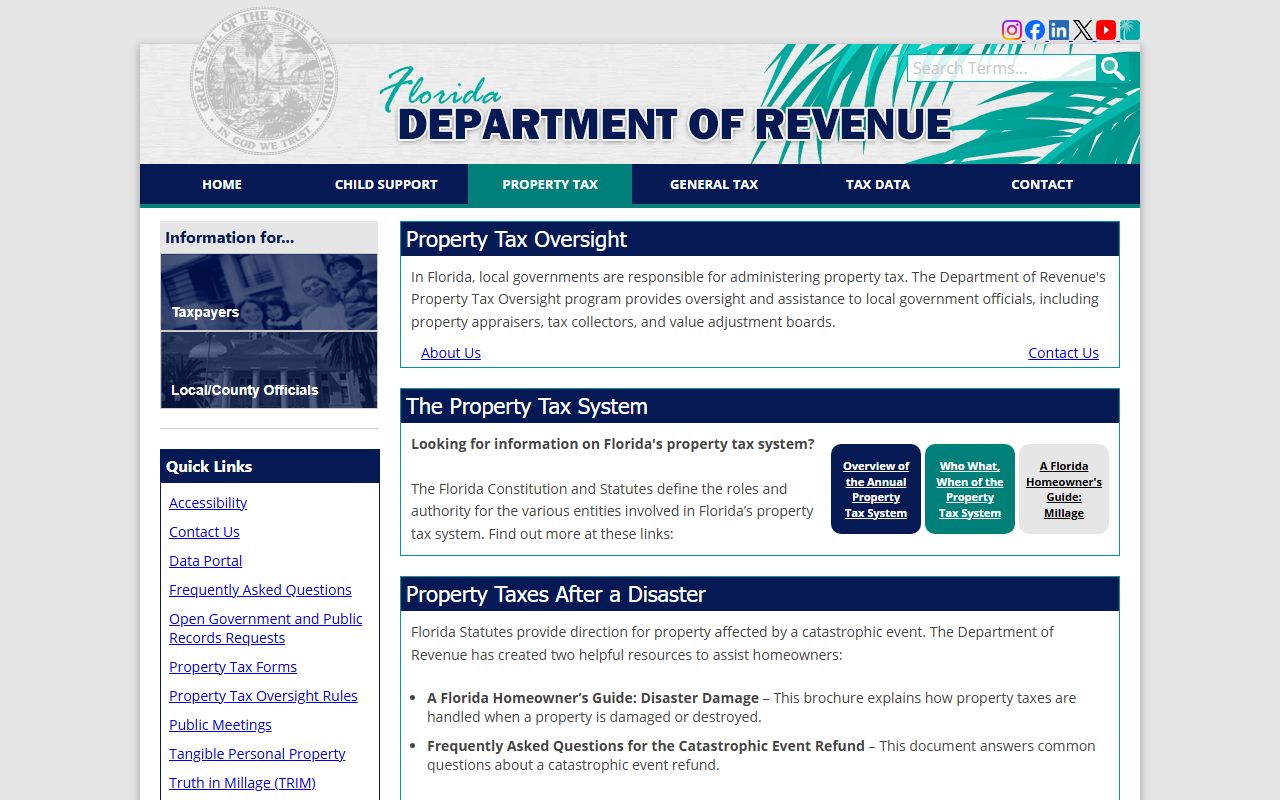
That page links to forms, data, county contacts, and answers to common questions about Florida's property tax system.
Cities in Citrus County
Citrus County's main communities include Crystal River, Inverness, Homosassa Springs, and Lecanto. None currently meet the 75,000-population threshold for a dedicated city page. The county seat is Inverness, where both the Property Appraiser and Tax Collector offices are located. Crystal River is the county's largest incorporated city and serves as a commercial hub along the Gulf Coast.