
Find St. Lucie County Property Tax Records
St. Lucie County property tax records are public documents maintained by the Property Appraiser and Tax Collector offices in Fort Pierce, covering all parcels in the county with assessment data, exemption status, ownership details, and tax payment history.
St. Lucie County Quick Facts
St. Lucie County Property Appraiser
The St. Lucie County Property Appraiser office is at 2300 Virginia Avenue, Fort Pierce, FL 34982. The phone is (772) 462-1500 and fax is (772) 462-1510. This office is responsible for assessing all real and personal property in the county as of January 1 each year. That value is what tax calculations start from. The appraiser does not collect taxes and does not set the rates.
St. Lucie County covers a large area of Florida's Treasure Coast and has seen strong growth in recent years. The property roll tracks every parcel in the county, recording the legal description, owner of record, assessed value, just value, taxable value, and any exemptions applied. Updates happen throughout the year as sales close, construction permits are pulled, and ownership changes are recorded.
The office uses mass appraisal methods guided by Florida Department of Revenue standards. Values are based on comparable market sales and property data, not individual annual inspections. The St. Lucie County Property Appraiser website provides a free parcel search tool. You can search by owner name, address, or parcel ID. Results show assessed values, building data, land data, sales history, and exemption detail.
Assessment standards are set under Chapter 192, Florida Statutes, which requires all Florida counties to assess at just value. The Florida Department of Revenue Property Tax Oversight office monitors compliance across all 67 county appraisers.
The St. Lucie County Property Appraiser website provides the primary parcel search tool for the county.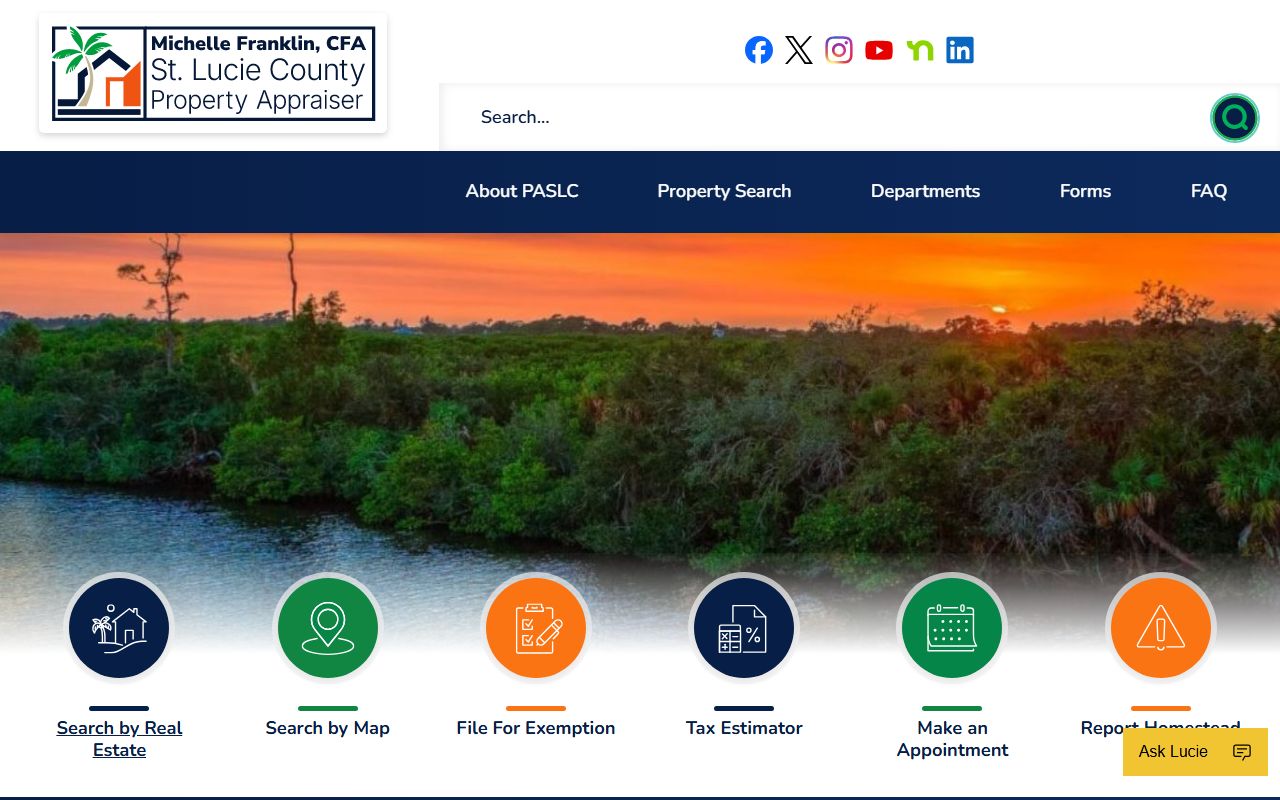
The appraiser's online search tool gives free access to all parcel records in St. Lucie County.
Tax Collection in St. Lucie County
The St. Lucie County Tax Collector handles billing, payment processing, and enforcement of property taxes. The mailing address is P.O. Box 308, Ft. Pierce, FL 34954-0308. The main phone is (772) 462-1650 and fax (772) 462-1968. The Tax Collector is an elected official, separate from the appraiser. The collector's job starts where the appraiser's ends.
Tax bills go out in November each year. They show the taxable value from the appraiser's roll, adjusted by any exemptions, then multiplied by the combined millage rates of the county, school board, and applicable special districts. St. Lucie County includes several taxing authorities, so the total bill reflects multiple rates added together.
Pay early and save money. November brings a 4% discount, December 3%, January 2%, and February 1%. After March 31, taxes are delinquent. At that point, the collector holds a tax certificate sale under Chapter 197, Florida Statutes. Investors buy certificates and earn interest until the owner redeems them. If unredeemed for two years, the investor can apply for a tax deed.
Contact the Tax Collector at (772) 462-1650 for payment options, office hours, and branch locations. The office can also provide information on the quarterly installment plan for those who prefer to spread out payments rather than pay a lump sum in November.
How to Search St. Lucie County Property Records
Start with the St. Lucie County Property Appraiser's website for assessment data. The parcel search accepts owner name, property address, or parcel ID. Records show current and prior-year values, land and building data, exemptions, and sales history. No account is needed and access is free.
For tax bill information, use the Tax Collector's online lookup. Enter a parcel ID or address to see current amounts due, recent payments, and any certificate history. The appraiser's and collector's databases work together to give a complete view of any property in the county.
The Florida DOR also offers a statewide property data portal with downloadable files. Researchers, investors, and title professionals often use this for large-scale analysis beyond individual parcel lookups.
All records are public under Chapter 119, Florida Statutes. You don't need to explain your reason. No Florida residency is required. Personal data on exemption applications, like Social Security numbers, is protected, but all core assessment and tax data is open.
Property Tax Exemptions Available in St. Lucie County
Florida exemptions apply to qualifying St. Lucie County properties. The homestead exemption is the most used. It cuts assessed value by up to $50,000 on a primary residence. The first $25,000 applies to all taxing authorities. The second $25,000 covers assessed value from $50,000 to $75,000 but does not apply to school board taxes.
Homestead triggers the Save Our Homes assessment cap. Each year, the assessed value of a homesteaded property can only go up by 3% or the rate of inflation, whichever is less. In a county where home values have risen fast, this cap protects long-term owners from steep annual tax increases. The SOH cap is codified in Chapter 193, Florida Statutes.
St. Lucie County also has a senior exemption for low-income residents over 65, along with disability, veteran, and widow/widower exemptions. Each has different eligibility rules. Most exemptions must be applied for by March 1 of the tax year. Applications are filed with the Property Appraiser's office. The full list of Florida exemptions and their rules is in Chapter 196, Florida Statutes.
Business owners: file a tangible personal property return with the appraiser by April 1 to claim the $25,000 TPP exemption automatically. This applies to all business personal property in the county.
Appealing a St. Lucie County Property Assessment
If you disagree with your assessed value, start by reviewing your TRIM notice when it arrives each summer. This notice shows the proposed assessment and what your estimated taxes will be. You have 25 days from the mailing date to file a petition with the St. Lucie County Value Adjustment Board.
The VAB schedules a hearing before a special magistrate. You present evidence that the appraiser's value is too high. Comparable sales from the same market area are the strongest evidence. Photos of damage, condition problems, or functional issues can support your case too. An independent appraisal carries significant weight. The magistrate reviews both sides and recommends an outcome. The board votes on the recommendation. All VAB proceedings are governed by Chapter 194, Florida Statutes.
You can still file suit in circuit court if the VAB rules against you. Most appeals settle before litigation. Pay at least the undisputed portion of your tax bill while an appeal is pending to avoid penalties separate from the appeal outcome.
Payment Options in St. Lucie County
Tax bills arrive in November. The face amount is the full tax with no discount. The 4% November discount is the biggest. It drops by 1% each month. Pay by March 31 to avoid delinquency. After that, penalties and interest apply under Chapter 197.
Online payment is available through the Tax Collector's website. Mail checks to P.O. Box 308, Ft. Pierce, FL 34954-0308. In-person payment is available at collector offices throughout the county. Call (772) 462-1650 for current office locations and hours.
A quarterly installment plan is available for those who want to spread payments. You must enroll in the spring before the tax year. The installment plan breaks the estimated tax into four payments. It is a good option for fixed-income households or anyone who finds the November lump sum difficult to manage.
The Florida Tax Collectors Association provides statewide information on the certificate and tax deed process if taxes go unpaid.
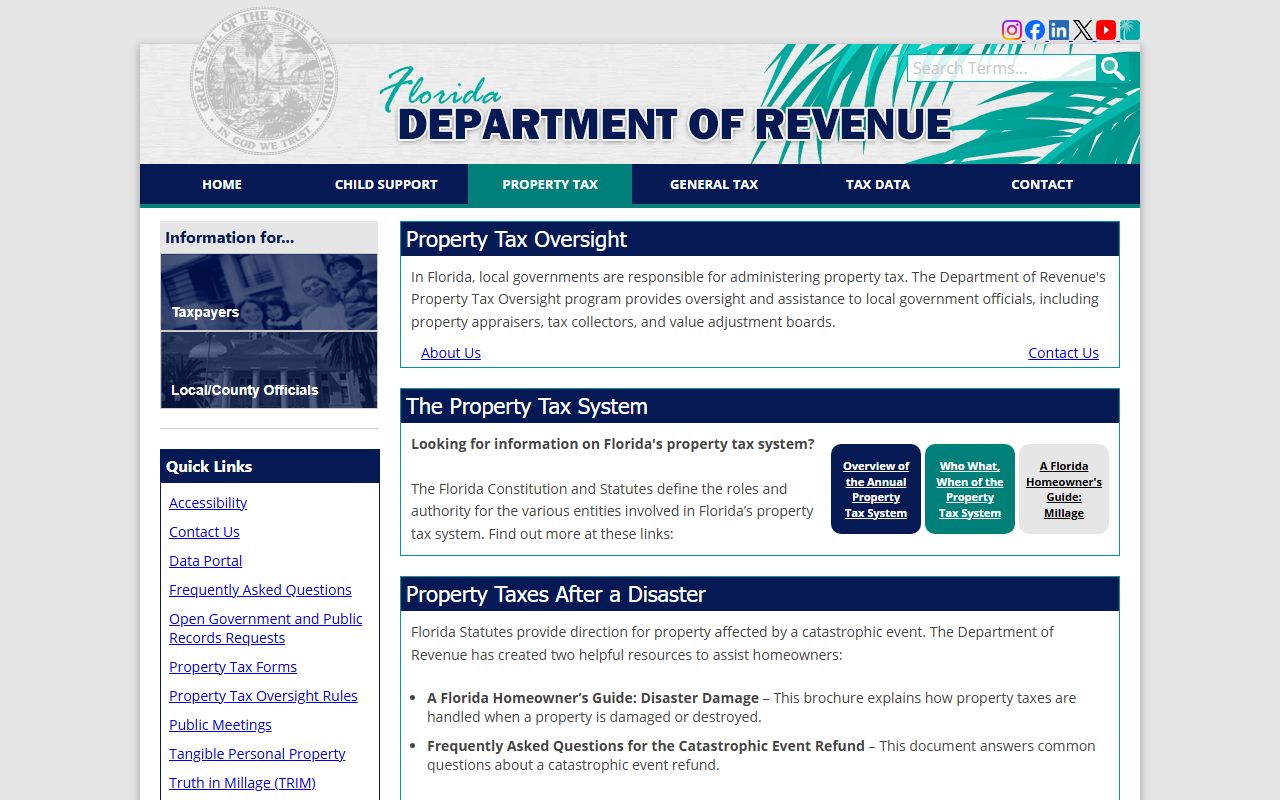
The Florida DOR site provides statewide context and oversight information related to all county tax collection processes.
Public Records Access in St. Lucie County
Florida's open records law, Chapter 119, Florida Statutes, gives everyone access to government records including property tax data. Assessment rolls, tax rolls, and payment records are all public. You don't need ID. You don't need to be a resident. You don't need to explain why you want the records.
The free online portals from the Property Appraiser and Tax Collector cover most needs. For records not available online, or for certified copies, contact the offices directly. Large bulk requests may come with a cost for staff time, but the data itself is public. The Florida DOR directory lists direct contacts for all county offices.
Cities in St. Lucie County
Fort Pierce is the county seat of St. Lucie County. Port St. Lucie is the largest city in the county and one of the fastest-growing cities in Florida. Property tax records for Port St. Lucie parcels are assessed by the St. Lucie County Property Appraiser, just like all other properties in the county. You can find more detail on the Port St. Lucie property tax records page.