
Martin County Property Tax Records
Martin County property tax records are public documents maintained by the Property Appraiser and Tax Collector offices in Stuart, Florida. These records cover every parcel in this Treasure Coast county and include assessed values, ownership data, exemption status, and tax payment history. This guide explains how to access those records, what each office does, and how Florida property tax law applies in Martin County.
Martin County Quick Facts
Martin County Property Appraiser
The Martin County Property Appraiser office is at 1111 S.E. Federal Highway, Suite 330, Stuart, FL 34994. Phone is (772) 288-5600 and fax is (772) 288-5975. This office values all real and personal property in Martin County as of January 1 each year. The appraiser does not set tax rates and does not collect taxes. Those are separate functions handled by the county commission, school board, and the tax collector.
Martin County covers the Treasure Coast area of Southeast Florida, with a mix of waterfront residential properties, golf course communities, agricultural land in the western areas of the county, and commercial properties along US-1 and the SR-76 corridor. Waterfront properties on the St. Lucie River, the Indian River Lagoon, and the Atlantic Ocean are among the highest-value parcels in the county. The appraiser values all of these using mass appraisal methods consistent with Florida Department of Revenue guidelines.
The Martin County Property Appraiser website offers a full online parcel search. You can look up any parcel by owner name, address, or parcel ID. Results show assessed value, taxable value, exemption status, sales history, and GIS maps with aerial imagery. The site is updated throughout the year as sales are recorded and changes are processed.
The Martin County Property Appraiser website provides the primary online search tool for property records in the county.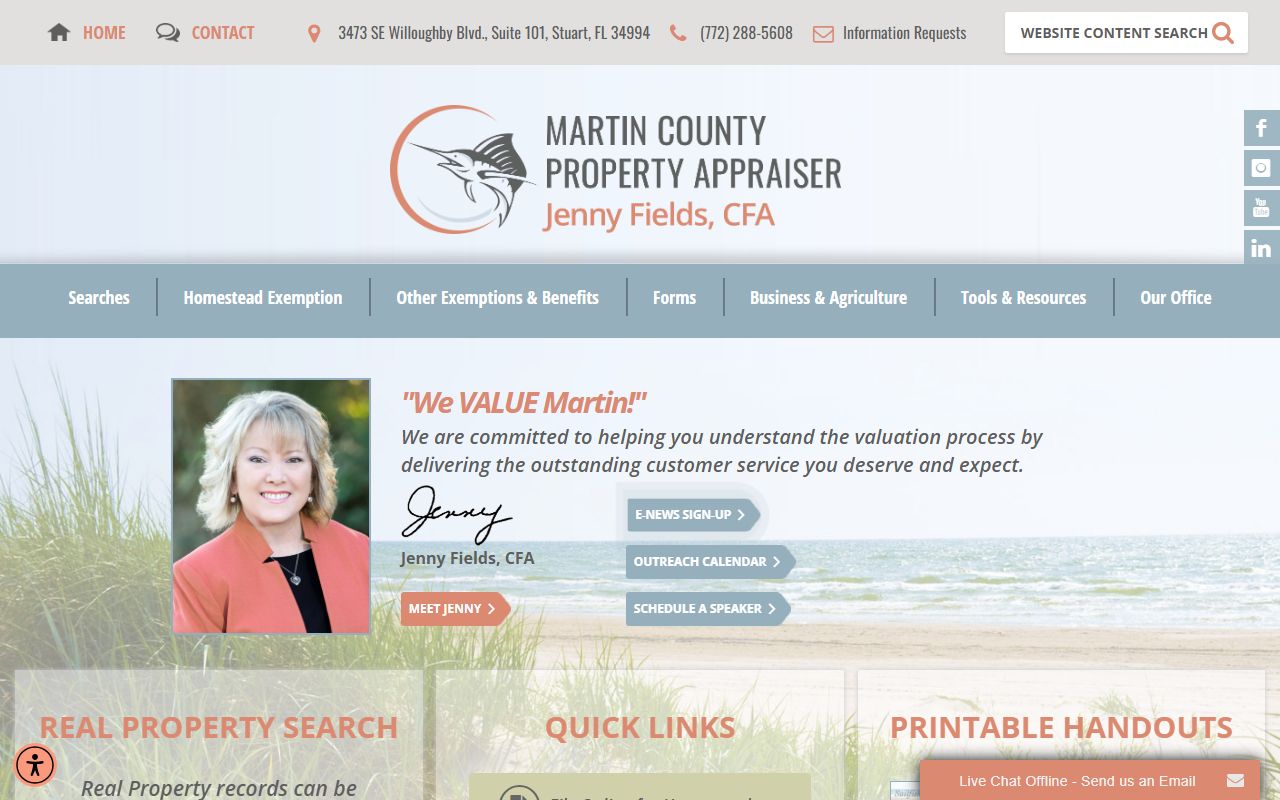
The appraiser's online portal returns current assessed values, exemption detail, ownership history, and sales data for any parcel in Martin County.
The Florida Department of Revenue oversees all county property appraisers through its Property Tax Oversight program. Visit the DOR Property Tax Oversight page for statewide guidance. Chapter 193, Florida Statutes is the primary law for how property must be assessed across Florida.
Tax Bills and Collection in Martin County
The Martin County Tax Collector office is at 3485 SE Willoughby Blvd., Stuart, FL 34994. Phone is (772) 288-5600. This office handles all billing, payment, and tax enforcement for the county. Tax bills go out each November and reflect the taxable value set by the appraiser multiplied by the combined millage rates from all local taxing bodies, the county, the school district, and any special districts that cover your parcel.
Martin County has a relatively high median home value compared to many Florida counties, which means property tax bills can be substantial even with the homestead exemption. The millage rates from various taxing authorities combine into a total rate that applies to your taxable value. Special districts, including those for fire, water, and community services, can add additional millage on top of the base county and school rates.
Florida's early-payment discount schedule applies. Pay in November for 4% off, December for 3%, January for 2%, and February for 1%. Taxes become delinquent after March 31. The collector then holds a tax certificate sale in June. That process is governed by Chapter 197, Florida Statutes. Investors bid on certificates to cover unpaid taxes, and the property owner must redeem with interest. Unpaid certificates can eventually lead to a tax deed sale.
For current payment options and office hours, the Florida Tax Collectors Association maintains a directory of all county collector offices. Online payment, mail, and in-person options are typically available. Contact the collector at (772) 288-5600 to confirm current branch locations and hours.
Homestead Exemption and Portability
Martin County homeowners who use their property as a primary residence can apply for the homestead exemption. The exemption reduces assessed value by up to $50,000. The first $25,000 applies to all taxing authorities. The second $25,000 applies to non-school levies only. The filing deadline is March 1. Applications go to the Property Appraiser's office in Stuart.
Homestead activates Save Our Homes (SOH), which caps annual increases in assessed value at 3% or the rate of inflation, whichever is lower. Given the high property values in parts of Martin County, particularly waterfront communities, SOH can result in a taxable value well below the market value for longtime owners. The cap resets when the property is sold or homestead is removed.
SOH portability lets you transfer your accumulated SOH benefit when you move to a new Florida homestead. You can transfer up to $500,000 of benefit to your new property. Apply within three years of abandoning your old homestead. The appraiser's office handles portability applications. All exemption programs are governed by Chapter 196, Florida Statutes. Forms are available at the DOR forms page.
Accessing Martin County Property Records
Martin County property tax records are open to the public under Chapter 119, Florida Statutes. Assessment data, ownership information, and tax payment status are available at no charge. No reason is required to access these records.
The fastest way to look up a parcel is through the appraiser's online portal at pa.martin.fl.us. For bulk data or county-wide downloads, the Florida DOR data portal at floridarevenue.com/property/Pages/DataPortal.aspx provides regularly updated data files for Martin County. These are free to download and useful for researchers, real estate professionals, and anyone who needs more than a single parcel lookup.
The Florida DOR data portal provides bulk Martin County property data for download at no charge.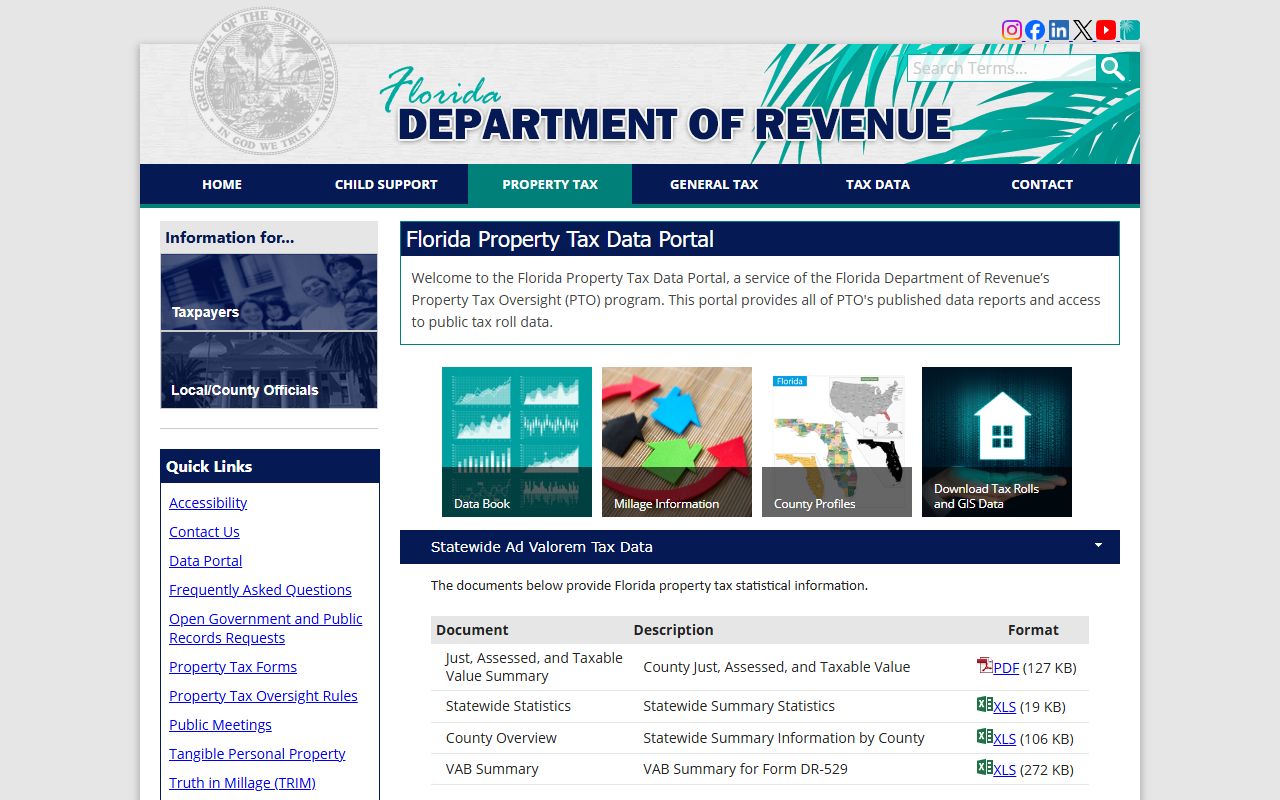
The portal is updated each year and covers all 67 Florida counties, including Martin.
In-person requests are handled at the appraiser's office in Stuart. For formal public records requests, contact the office in writing. Certified copies may carry a small fee. Staff can search records by parcel ID, address, or owner name.
TRIM Notices and Value Disputes
Martin County property owners receive Truth in Millage (TRIM) notices each August. The notice shows your proposed assessed value, exemptions applied, and the proposed millage rates from each taxing authority. It also lists upcoming public hearings where you can speak before rates are finalized. The TRIM notice is a preview of your November tax bill, not the bill itself.
If you disagree with your assessed value, contact the appraiser's office at (772) 288-5600 to request an informal review. Many disputes are resolved this way without a formal petition. If the informal review does not resolve the issue, you have 25 days from the TRIM notice mailing date to file a petition with the Value Adjustment Board. The Martin County VAB hears appeals of assessments, exemption denials, and classification decisions. Filing fees are typically $15 per parcel.
The VAB process is governed by Chapter 194, Florida Statutes. Both you and the appraiser present evidence at the hearing, and the board issues a ruling. If you still disagree, you can appeal to circuit court. The DOR property tax FAQ provides a plain-language walkthrough of each step in the appeals process.
Agricultural Land in Western Martin County
The western portion of Martin County includes significant agricultural land, citrus groves, cattle operations, and other farming uses. These properties may qualify for agricultural classification, which allows the land to be assessed based on its use in agriculture rather than its market value. Given that western Martin County land has attracted development interest, this classification can mean a substantial difference in assessed value and tax burden.
Applying for agricultural classification requires a March 1 deadline. The appraiser evaluates whether the land is used in good faith for commercial agricultural production. You will likely need to show sales records, lease agreements, or other documentation of active agricultural use. Personal garden plots or rural residential land with a few hobby animals typically do not qualify. If your application is denied, you can appeal to the VAB under Chapter 194.
Once classification is granted, it continues year to year as long as the qualifying use continues. If the land is converted to another use or sold, rollback taxes can apply for up to three prior years. The DOR FAQ has useful information on agricultural classification rules and what happens when classification ends.
Additional Property Tax Resources
The Property Appraisers Association of Florida represents all county appraisers and tracks legislative changes affecting assessment law. Their site has a complete directory of all 67 county appraiser offices with current contact details. The DOR also publishes application forms for all Florida property tax exemptions at the forms library.
The Florida DOR Property Tax Oversight program sets the standards Martin County must follow for assessment.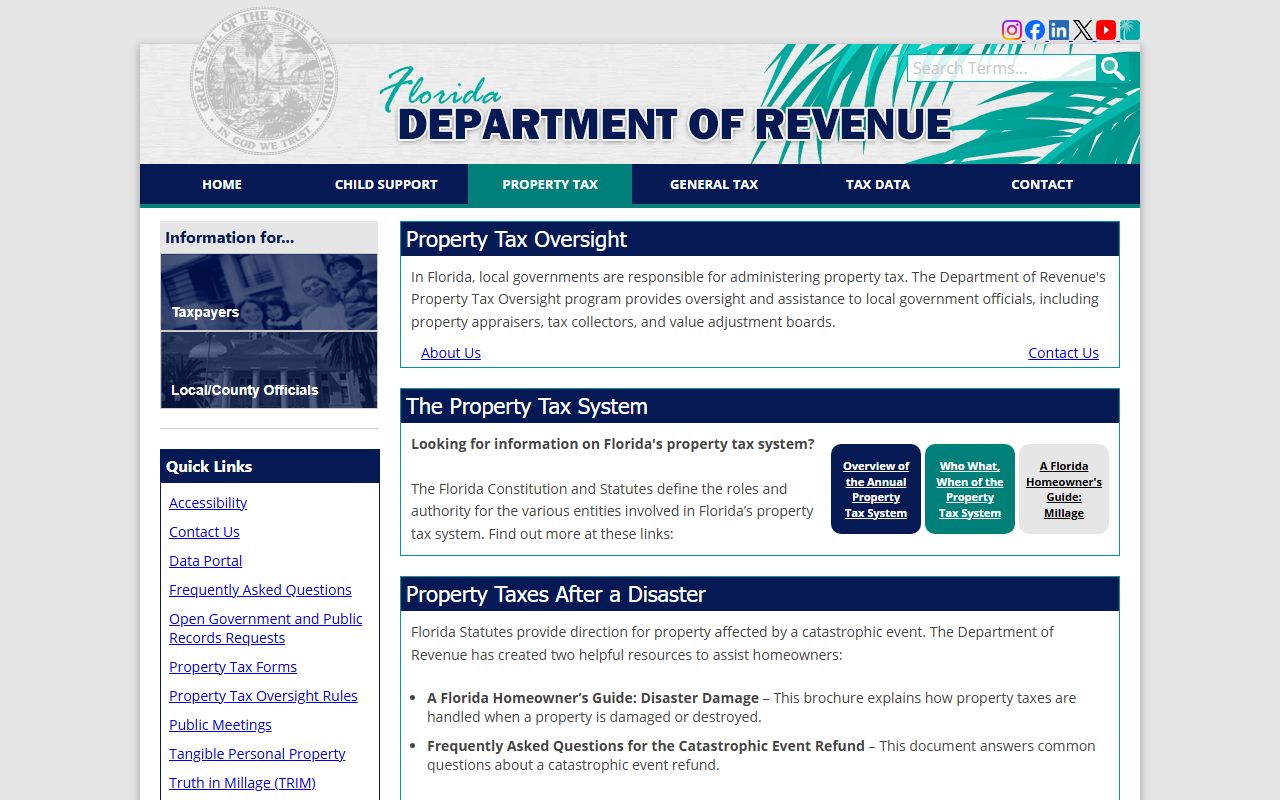
DOR oversight ensures Martin County's assessment practices are consistent with the rules that apply across all Florida counties.
Martin County's Treasure Coast location and high property values make it one of the more active markets on Florida's southeast coast. For the most current parcel data, use the appraiser's online portal or contact the office directly. Data shown on third-party sites may lag behind recent sales or reassessments.
Nearby Counties
Martin County borders several other Southeast and South Florida counties. Each maintains its own property appraiser office and tax records.