
Homestead Property Tax Records
Homestead property tax records are public documents managed by Miami-Dade County offices in Miami. The Miami-Dade County Property Appraiser assesses all parcels within Homestead city limits, and the Miami-Dade County Tax Collector handles billing and payment. Located in the southern part of Miami-Dade County near the Everglades and Florida Keys, Homestead has a mix of residential neighborhoods, agricultural land, and commercial properties. This page explains how to find records, what exemptions apply, how to appeal a value, and how to pay your bill.
Homestead Quick Facts
Miami-Dade County Tax Administration for Homestead
Homestead is one of many cities within Miami-Dade County. All property tax administration for the city flows through county-level offices. The Miami-Dade County Property Appraiser sets values for every parcel inside Homestead. The Miami-Dade County Tax Collector handles billing and collection. Both offices are based in Miami, not in Homestead itself.
Homestead is in the southern tip of Miami-Dade County, far from the county seat. But distance from Miami does not change the process. Every Homestead parcel goes through the same county system as a parcel in Coral Gables or North Miami. The appraiser uses mass appraisal methods and the same state-mandated standards. Values are based on comparable sales, building data, and land characteristics.
Florida sets January 1 as the assessment date under Chapter 192, Florida Statutes. Values are locked in as of that date. Changes that happen later in the year do not affect the current tax bill. The Miami-Dade Property Appraiser follows Florida Department of Revenue standards in setting all values.
For Homestead property tax questions, contact the Miami-Dade County Property Appraiser at 305-375-4712. Office: 111 NW 1st Street, Suite 710, Miami, FL 33128. More county details are on the Miami-Dade County property tax records page.
Miami-Dade County Property Appraiser
The Miami-Dade County Property Appraiser is at 111 NW 1st Street, Suite 710, Miami, FL 33128. Phone: 305-375-4712. Website: miamidadepa.gov. This office values all real and personal property in Homestead and across Miami-Dade County as of January 1 each year. The appraiser does not set millage rates and does not collect taxes. Its only job is to value property and maintain the county tax roll.
The property roll for Homestead parcels includes each parcel's owner of record, legal description, just value, assessed value, taxable value, and any exemptions. The office updates records as deeds are recorded, permits are pulled, and ownership transfers. The online property search at miamidade.gov/pa/property-search.asp lets anyone look up a Homestead parcel by address, owner name, or parcel ID at no cost.
Search results show current and prior-year values, exemption breakdown, land and building data, and sales history. This data is public under Chapter 119, Florida Statutes. You do not need an account or ID to search. The system is available around the clock.
The Florida Department of Revenue Property Tax Oversight page explains how Miami-Dade County valuations are reviewed.
The DOR monitors compliance for all county appraisers, including Miami-Dade, which serves Homestead properties.
Miami-Dade County Tax Collector
The Miami-Dade County Tax Collector handles billing and payment for Homestead property taxes. Office: 200 NW 2nd Avenue, Miami, FL 33128. Phone: (305) 375-5570. Online payment: mdctaxcollector.gov/property-tax/. Tax bills go out in November each year. The bill is based on taxable value set by the appraiser, multiplied by all applicable millage rates.
Homestead property owners pay millage rates from Miami-Dade County, the school board, the City of Homestead, and any special districts. These rates are combined on a single bill. The total will differ from one parcel to the next depending on location and applicable districts.
Florida's discount schedule rewards early payment. Pay in November and you save 4%. December earns 3%, January 2%, and February 1%. After March 31, taxes are delinquent. The collector's online portal lets you pay by credit card or e-check, look up balances, and review prior bills. In-person payment is available at collector locations across Miami-Dade County.
How to Search Homestead Property Tax Records
Use the Miami-Dade Property Appraiser's search at miamidade.gov/pa/property-search.asp. Enter an address, owner name, or parcel number. Results show the current just value, assessed value, Save Our Homes cap if applicable, taxable value, and exemptions. Sales history and property details are included. The search is free and requires no registration.
For billing data, the Miami-Dade Tax Collector's portal at mdctaxcollector.gov lets you look up balances, check payment status, and pay online. Use both systems together to get the full picture of any Homestead parcel.
All property tax records are public under Chapter 119. No ID is needed. No reason is required. For records not available online, submit a written public records request to the Property Appraiser's office. The office must respond in a reasonable time. Copies may carry a fee for production costs, but the records themselves are not withheld from the public.
Florida Statutes Chapter 192 is the core law governing how Homestead properties are assessed each year.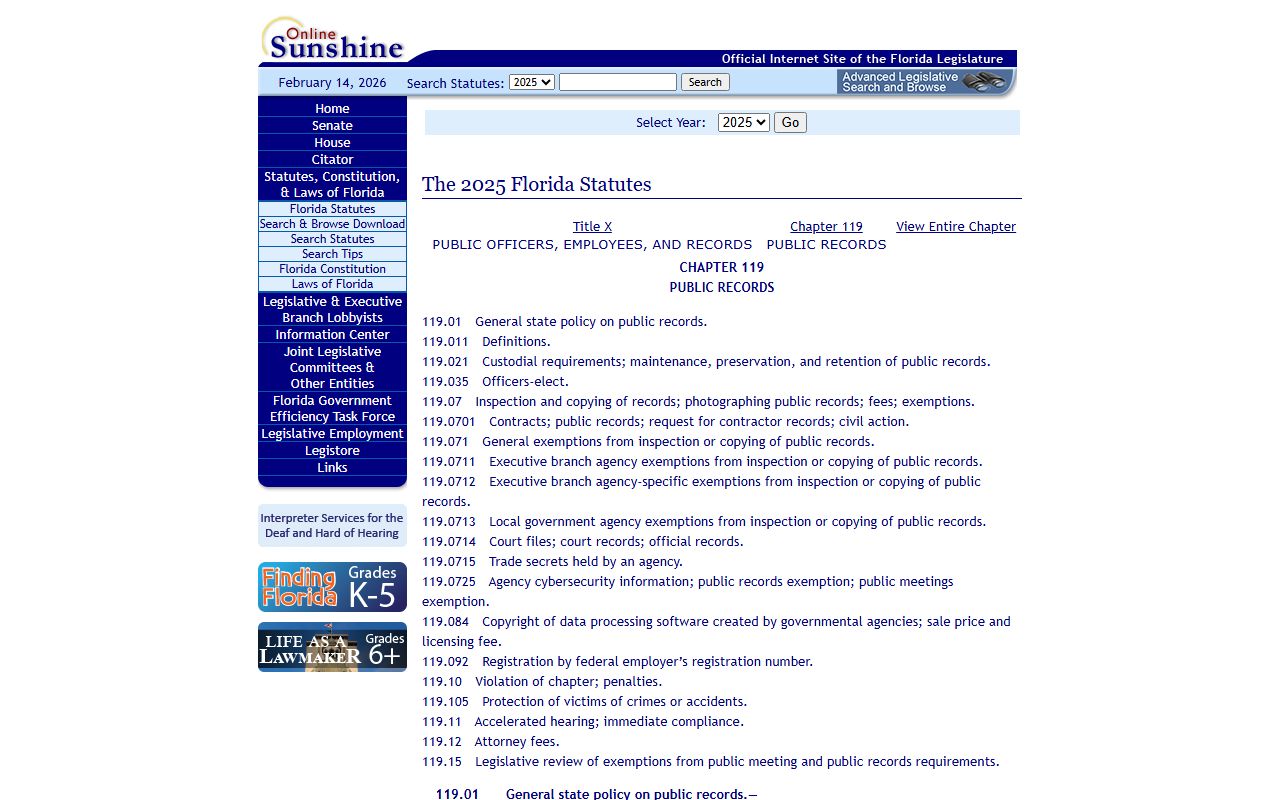
Chapter 192 defines just value and sets the legal framework that Miami-Dade County uses to assess all Homestead parcels.
Property Tax Exemptions for Homestead Residents
Despite the name, the homestead exemption and the City of Homestead are two separate things. The exemption is a Florida-wide benefit. If your home in Homestead is your primary residence, you can apply for up to $50,000 off your assessed value. The first $25,000 applies across all taxing authorities. The second $25,000 applies to value between $50,000 and $75,000 and excludes school taxes.
Homestead exemption also locks in the Save Our Homes cap. After the exemption is granted, assessed value can only rise by 3% or the rate of inflation per year, whichever is lower. This protection comes from Chapter 193, Florida Statutes. In a fast-rising market, the cap can produce very large savings over time.
Other exemptions available to Homestead, FL residents under Chapter 196, Florida Statutes include senior exemptions for low-income residents over 65, disability exemptions, combat veteran exemptions, and the surviving spouse of a first responder killed in the line of duty. Applications are filed with the Miami-Dade County Property Appraiser. The deadline for most exemptions is March 1. Missing that date typically means waiting another year.
Business owners with tangible personal property in Homestead should file a TPP return with the appraiser by April 1. The first $25,000 of tangible personal property value is exempt. Filing on time avoids a late-filing penalty.
Appealing a Homestead Assessment
If you believe your Homestead property is over-assessed, you can appeal. Each summer the Miami-Dade Property Appraiser sends TRIM notices showing the proposed assessed value and an estimate of the coming tax. From the date on the notice, you have 25 days to file a petition with the Miami-Dade County Value Adjustment Board.
The VAB process is governed by Chapter 194, Florida Statutes. Hearings are held before a special magistrate who reviews evidence from both sides. Strong evidence includes recent sales of comparable properties, photos of any property defects or damage, and an independent appraisal. The magistrate makes a recommendation, and the board votes. You do not need a lawyer to file a petition, and the filing fee is modest.
If the VAB outcome still does not satisfy you, the next step is circuit court. Few cases go that far. While your appeal is open, pay at least the non-disputed part of your tax bill to avoid additional penalties and interest.
Delinquent Taxes and Tax Certificate Sales
Homestead property taxes not paid by March 31 are delinquent. The Miami-Dade Tax Collector then holds a tax certificate sale in June. Investors pay the delinquent taxes and receive a certificate that earns interest. The rate is determined by competitive bidding, with a maximum of 18%. If the property owner does not redeem the certificate within two years, the holder can apply for a tax deed.
A tax deed sale can result in the forced auction of the property to satisfy the debt. This process is set out in Chapter 197, Florida Statutes. A tax deed on the public record creates complications for any future sale or refinancing of the property. If you are having trouble paying your Homestead taxes, contact the Miami-Dade Tax Collector before the March 31 deadline to learn what options may be available.