
St. Petersburg Property Tax Records
St. Petersburg property tax records are public documents kept by the Pinellas County Property Appraiser and Tax Collector. Every parcel in St. Pete has a public record that shows the assessed value, ownership data, exemptions, and tax bill history. This guide explains where to find those records, what they contain, and how to handle exemptions, appeals, and payments.
St. Petersburg Quick Facts
Property Tax in St. Petersburg
St. Petersburg is part of Pinellas County, and all property tax administration happens at the county level. The Pinellas County Property Appraiser values every parcel in St. Pete as of January 1 each year. The Pinellas County Tax Collector handles billing and collects the taxes. Note that the Property Appraiser's main office is located in Clearwater - the county seat - not in St. Petersburg itself.
St. Petersburg's real estate market has moved sharply upward. Waterfront properties, condominiums near downtown, and single-family homes in the central neighborhoods have all seen notable value gains in recent years. For property owners without homestead protection, these gains translate directly into higher tax bills. For homesteaded owners, the Save Our Homes cap limits how fast the assessed value can climb each year.
The total tax bill on a St. Petersburg parcel reflects multiple taxing authorities. Pinellas County, the Pinellas County School Board, the City of St. Petersburg, and various independent special districts all levy millage against your property. The TRIM notice you get each August lays out each taxing authority's proposed rate and gives you time to respond before rates are finalized.
The Florida Department of Revenue Property Tax Oversight page describes the statewide framework. The DOR reviews Pinellas County's assessment roll each year to confirm it meets the required level of assessment. All of this happens under the rules set in Chapter 192, Florida Statutes.
Pinellas County Property Appraiser
The Pinellas County Property Appraiser's office is at 315 Court Street, Clearwater, FL 33756. Phone: (727) 464-3207. Fax: (727) 464-3798. The Pinellas County Property Appraiser website is where you search parcel records. The site has a lookup tool that accepts an address, owner name, or parcel ID. Once you find your parcel, the record shows current and prior-year values, building data, land data, exemptions, and sales history.
The appraiser's office covers all of Pinellas County, which includes St. Petersburg, Clearwater, Largo, and dozens of smaller municipalities. Staff use mass appraisal methods set by Florida Department of Revenue guidelines to value all real property. The county's assessment roll is certified each July 1 and submitted to the DOR for review. Under Chapter 193, Florida Statutes, just value is the standard - and the appraiser must achieve a level of assessment close to 100% of just value for each property class.
St. Petersburg has a dense mix of property types. The downtown waterfront has high-rise condos. Central neighborhoods have older block homes and bungalows. Outskirts areas include retail strips, industrial parks, and newer subdivisions. The appraiser handles each type with different valuation methods. Condo records are maintained at the unit level, so each individual unit has its own assessed value and parcel ID.
If the property data on file for your parcel is wrong - wrong square footage, wrong year built, wrong property type code - you can request a review. Contact the Property Appraiser's Clearwater office and ask to have the data checked. If there's an error, correcting it may reduce your assessed value without a formal appeal.
The Florida DOR Property Tax Oversight page provides the statewide context for how St. Petersburg and Pinellas County assessments work.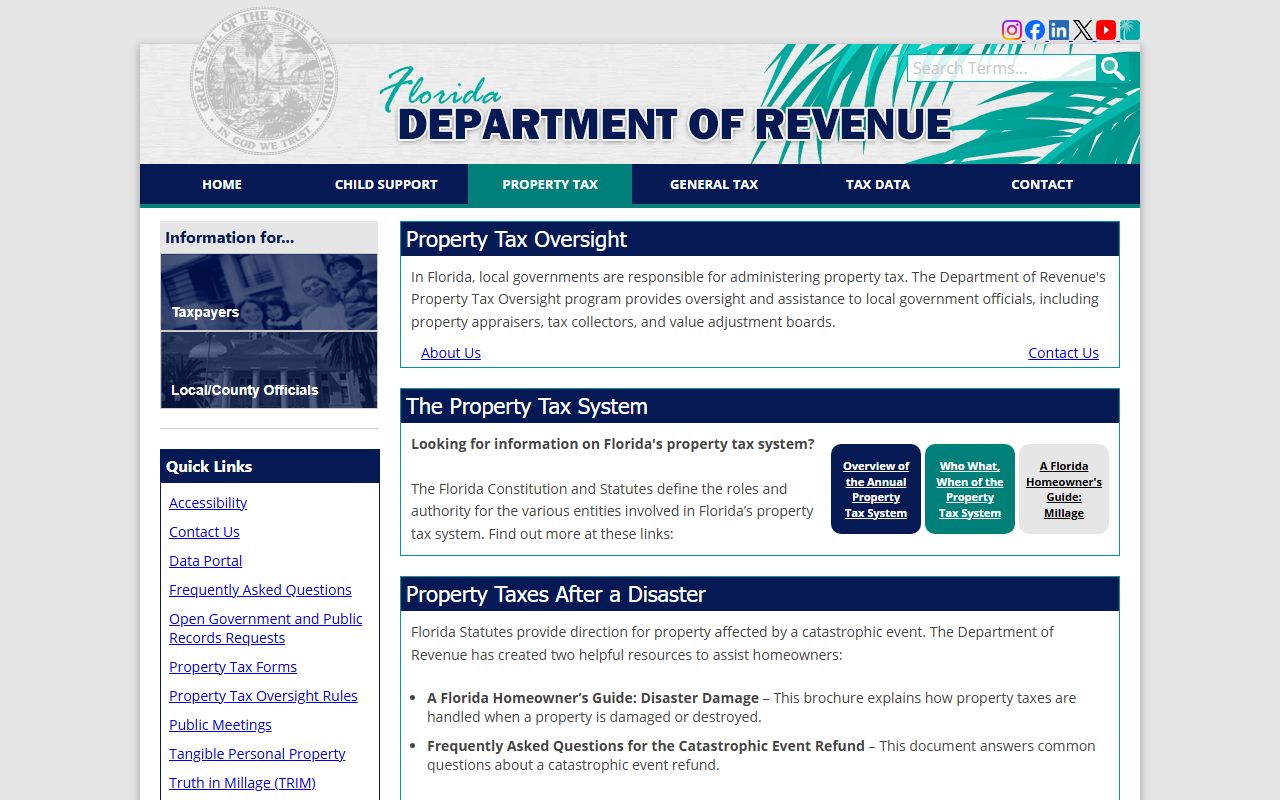
Review the DOR page to understand how statewide standards shape the way the Pinellas County Property Appraiser values St. Petersburg properties.
Tax Collector
The Pinellas County Tax Collector's mailing address is P.O. Box 6288, Clearwater, FL 33758. Phone: (727) 464-7777. Fax: (727) 453-3784. The collector's office handles billing and payment for all Pinellas County property taxes. Multiple branch service centers operate across the county, including locations closer to St. Petersburg. Check the collector's website for the nearest branch address and hours.
Tax bills go out in November. The standard discount schedule applies: 4% off in November, 3% in December, 2% in January, 1% in February. After March 31, taxes are delinquent. Delinquent accounts go into the tax certificate sale held in June. The process is governed by Chapter 197, Florida Statutes. Investors who buy certificates at auction earn interest until the property owner pays them back. If two years pass without redemption, the investor may apply for a tax deed.
The collector offers an installment plan for owners who prefer to pay in four quarterly payments rather than one lump sum. Enroll before May 1. The installments are due in June, September, December, and March. There is a small fee for the plan. It does not save money compared to paying the full amount with the November discount, but it spreads the cash outflow evenly across the year.
Online payment is available through the collector's website. You can pay by credit card or e-check. In-person payment is available at the Clearwater main office and at branch locations. If you mail a check, use the address on your tax bill and allow enough time for it to arrive before the end of a discount period.
How to Search St. Petersburg Property Tax Records
Go to the Pinellas County Property Appraiser's website and use the search tool. Enter the property address, owner name, or parcel ID. The search returns the current assessed value, taxable value, exemptions, and detailed property information. Sales history going back several years is also shown. All of this data is free to access with no login required.
For billing data, use the Pinellas County Tax Collector's separate portal. Enter the parcel ID or address to see the amount currently due, discount deadlines, and payment history. If a tax certificate is outstanding on the parcel, it will appear in the collector's system.
Florida's Chapter 119 public records law opens all property tax records to the public. You do not need to be a Florida resident. You do not need to explain why you want the records. The only data shielded from public view is specific personal information - Social Security numbers, bank account data - protected by separate state law.
For bulk data, the Florida DOR data portal offers county-level summary files. These are useful for researchers and investors who want aggregate data rather than individual parcel records. For in-person requests, visit the Clearwater office at 315 Court Street. Staff can assist with records not available through the online tools. Certified copies may carry a small fee.
The Florida DOR contact page helps you find the right state-level office when your St. Petersburg or Pinellas County questions need a state answer.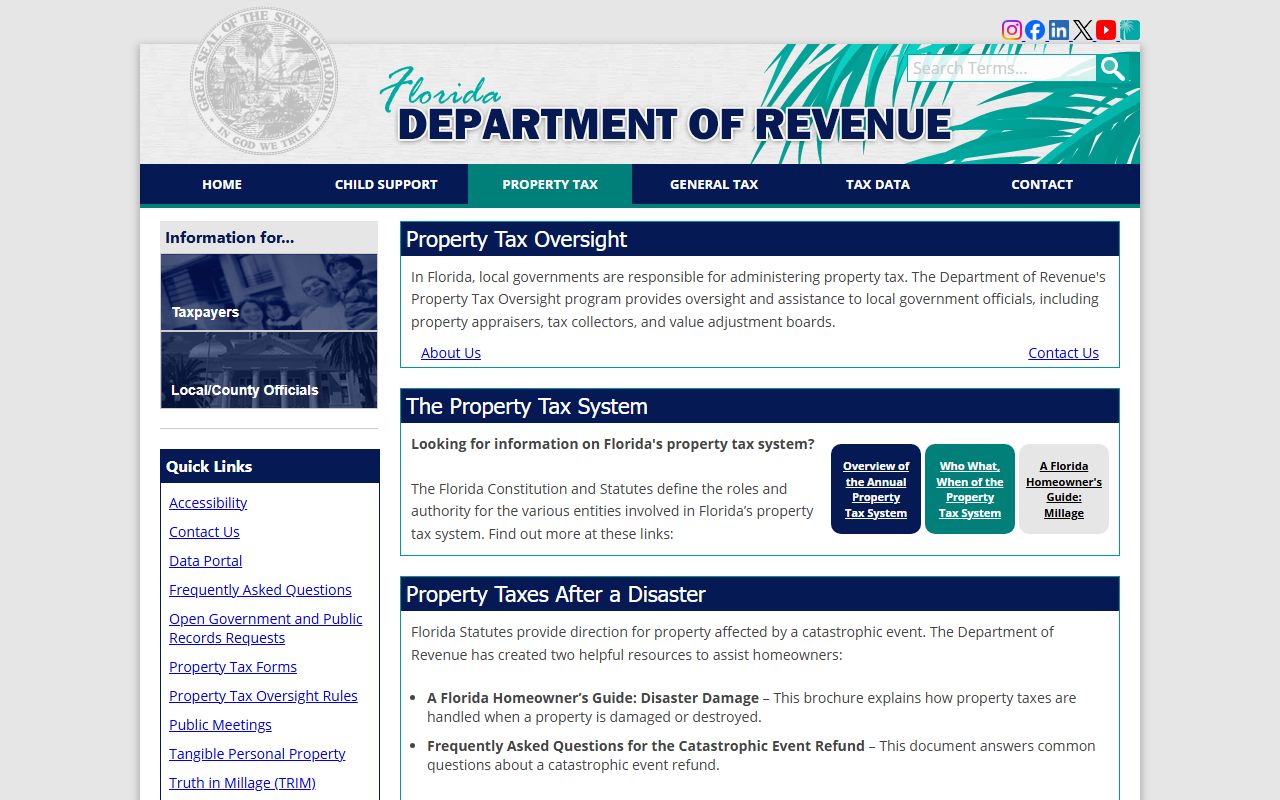
The DOR contact page is the right resource when the county office does not have what you need for your St. Petersburg property tax question.
Exemptions in St. Petersburg
Florida exemptions are available to qualifying St. Petersburg property owners. The homestead exemption is the most common and most valuable. It removes up to $50,000 from the assessed value of a primary residence. Apply at the Pinellas County Property Appraiser's office by March 1. Bring your Florida driver's license or ID showing the St. Petersburg address, your vehicle registration if applicable, and the parcel ID of the property. Exemptions are governed by Chapter 196, Florida Statutes.
Homestead also triggers the Save Our Homes cap. After the first full year of exemption, annual increases in assessed value are capped at 3% or the rate of inflation - whichever is lower. Given St. Petersburg's rising real estate market, this cap protects long-term homeowners from large year-over-year tax increases. The cap resets when ownership changes, so new buyers often see a significant jump in assessed value in the first tax year after purchase.
Portability lets you transfer your accumulated SOH benefit when you sell your St. Petersburg home and buy another Florida property within two years. The amount you can transfer depends on the difference between your assessed value and just value at the time of sale. Apply for portability with the new property's appraiser at the time you apply for homestead on the new home. The Pinellas County Property Appraiser's office can answer specific questions about how portability is calculated.
Additional exemptions available in St. Petersburg include the senior low-income exemption, veteran disability exemptions, total disability exemptions, and surviving spouse exemptions. Each has its own eligibility criteria. The $25,000 tangible personal property exemption is available to businesses that file a return by April 1 each year.
VAB Appeals
St. Petersburg property owners can appeal their assessed value to the Pinellas County Value Adjustment Board. The TRIM notice each August opens a 25-day window to file a petition. The VAB is independent from the Property Appraiser and includes members of the county commission and school board as well as appointed citizens. VAB procedures follow Chapter 194, Florida Statutes.
Hearings are held before special magistrates. Come with evidence. Comparable sales from the same neighborhood during the same time period are the most persuasive evidence for a residential property. Photos of condition problems, cost estimates for needed repairs, and independent appraisals all help. The magistrate reviews both sides and makes a recommendation. The VAB votes on it. If you lose, circuit court is the final option.
Pay the non-disputed portion of your tax bill while the appeal is active. Failing to do so can lead to delinquency charges and a tax certificate being issued against the property, even if the appeal is eventually successful. The filing fee for a VAB petition is modest and varies by property type.