
Find Lauderhill Property Tax Records
Lauderhill property tax records are maintained by Broward County, which handles assessment and collection for all parcels in the city. The Broward County Property Appraiser and Tax Collector offices serve every city in the county from their locations in Fort Lauderdale and Plantation. This page covers how to access those records and what they contain.
Lauderhill Quick Facts
Broward County Property Appraiser
The Broward County Property Appraiser's main office is at 115 S. Andrews Ave., Room 111, Fort Lauderdale, FL 33301. The phone is (954) 357-6830. The appraiser is an elected official who values all real and personal property in Broward County as of January 1 each year. For Lauderhill parcels, the appraiser reviews sales data from the city and similar nearby areas to set just values that reflect current market conditions.
The appraiser does not set millage rates and does not collect taxes. It is a pure assessment function. Once values are set, local governments, including Broward County, the School Board, and the City of Lauderhill, each set their own millage rate. Your tax bill is the sum of all those rates applied to your taxable value.
The Broward County Property Appraiser website has a full online search tool. Enter a Lauderhill address, owner name, or folio number to find the parcel record. The record shows current assessed value, taxable value, exemptions on file, sale history, and building data. The site also has map tools to view parcels visually by neighborhood.
Florida law requires all county appraisers to value property at just value under Chapter 192, Florida Statutes. The Florida Department of Revenue reviews Broward County's work each year. You can read DOR guidance at the Property Tax Oversight page. If the county's values are found to be out of range, the DOR can require corrections.
In-person services for Lauderhill residents are available at the Fort Lauderdale office. The office is open on normal business weekdays. Staff there help with exemption applications, TRIM notice questions, and information about how to appeal an assessment.
The Broward County Property Appraiser website is where you start any Lauderhill property records search.
The Florida Tax Collectors Association provides statewide context for how county collection offices operate across Florida.
Tax Collection for Lauderhill Properties
The Broward County Tax Collector handles billing and collection for all Lauderhill parcels. The collector's office is at 1800 NW 66th Ave., Suite 100, Plantation, FL 33313. The phone is (954) 765-4697. The Broward County Tax Collector website lets you look up bills, check payment status, and pay online.
Bills go out each November. The amount shown is before discounts. Your Lauderhill bill includes millage from Broward County, the Broward County School Board, the City of Lauderhill, and any applicable special districts. Each authority sets its own rate, and they are all listed on your bill. The total of all those rates times your taxable value equals your gross tax before discounts.
Pay early and save. November earns 4% off the gross bill. December is 3%, January is 2%, and February is 1%. Pay by March 31 to avoid delinquency. Once taxes go past due, rules under Chapter 197, Florida Statutes apply. The collector holds a certificate sale where investors pay the delinquent taxes and earn interest. Leaving taxes unpaid long enough can lead to a tax deed sale of your property.
The Plantation office at NW 66th Ave. is the primary service center for Lauderhill residents given its location. You can pay in person there, online through the collector's website, or by mail.
How to Search Lauderhill Property Tax Records
Start at the Broward County Property Appraiser site and use the parcel search tool. Enter the Lauderhill street address or the folio number if you have it. The results show each matching parcel. Click on any one to get the full record, assessed value, taxable value, exemptions, land data, building data, and every recorded sale. This is all free and open to anyone.
If you need billing or payment data rather than appraisal data, go to the Broward County Tax Collector site. Use the folio number from the appraiser's record to search. The collector's system shows current bill status, whether taxes are paid, and payment history going back several years.
All of these records are public under Chapter 119, Florida Statutes. You do not need an account or a stated reason to access them. The online tools work around the clock and are updated regularly. For certified copies or requests involving large volumes of data, contact the county offices directly.
Note: Broward County uses a folio number system. When moving between the appraiser and collector websites, use the folio number to ensure you are pulling records for the same parcel on both sites.
Property Tax Exemptions in Lauderhill
Florida's homestead exemption is the main tax break for Lauderhill homeowners who use the property as their primary residence. It reduces assessed value by up to $50,000. The first $25,000 applies to all taxing authorities. The second $25,000 covers value between $50,000 and $75,000 and excludes school taxes. The annual savings vary depending on your total tax rate, but for most Lauderhill homeowners the exemption is significant. Full rules are in Chapter 196, Florida Statutes.
The Save Our Homes cap follows homestead. Once you have homestead, your assessed value can only rise by 3% per year or the inflation rate, whichever is lower. In a county like Broward where property values have climbed steadily, this cap can produce large differences between just value and assessed value over time. It protects long-term owners from having their taxes rise as fast as the market moves.
Other exemptions cover seniors with limited income, disabled residents, veterans, surviving spouses of military and first responders, and tangible personal property for businesses. The business personal property exemption gives the first $25,000 of value free, but you must file a return with the appraiser by April 1 to claim it. All personal exemptions must be filed with the appraiser by March 1.
If you plan to move from your current homesteaded property to a new one in Florida, portability lets you carry some of your SOH savings to the new home. You have a limited time after moving to apply for portability. The appraiser's office handles this along with the homestead application.
Chapter 196, Florida Statutes covers every property tax exemption available to Lauderhill homeowners.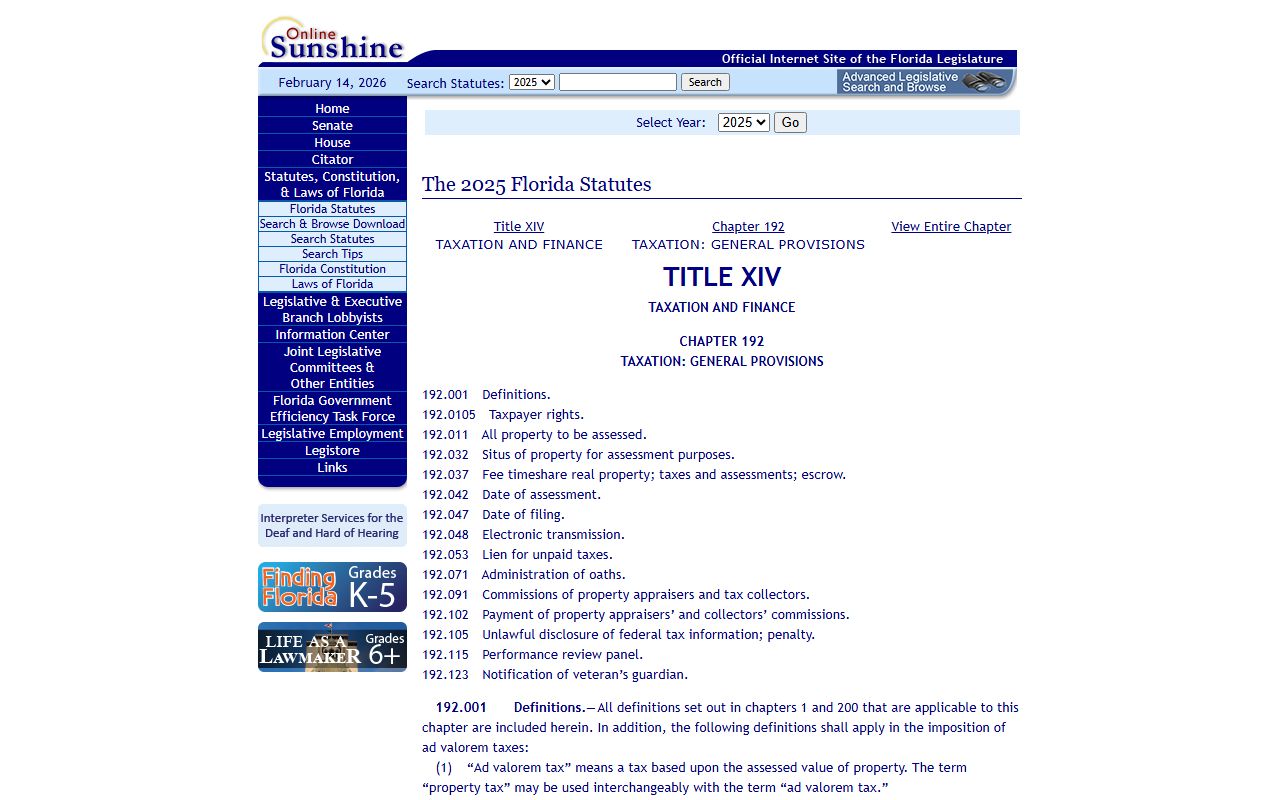
The statute page covers homestead, senior, veteran, and disability exemptions applicable to Lauderhill parcels.
Appealing a Lauderhill Assessment
You can challenge your assessed value through the Broward County Value Adjustment Board (VAB). Each August, the appraiser sends TRIM notices. You have 25 days from that mailing to file a petition with the VAB. The filing fee is modest and varies based on the type of property. You do not need an attorney for a residential appeal, though many commercial property owners hire one.
At the VAB hearing, a special magistrate reviews both sides. Bring comparable sales of similar Lauderhill properties, photos of any defects, and an independent appraisal if you have one. The magistrate recommends a value. The board votes to accept or reject the recommendation. Appeals are governed by Chapter 194, Florida Statutes.
Pay the non-disputed part of your tax bill by March 31 while the appeal is in progress. Failure to pay on time creates penalties separate from the appeal itself. If the VAB rules in your favor, you get a refund. If not, you can still file a lawsuit in circuit court, though most cases resolve at the VAB stage.
Florida Law and Lauderhill Property Taxes
The Florida statutes that govern Lauderhill property taxes are the same ones that apply throughout the state. Assessment is under Chapter 192. The SOH cap and assessment roll process are in Chapter 193. Appeals fall under Chapter 194. Exemptions are in Chapter 196. Collection and delinquency are covered by Chapter 197. And public access to all these records is guaranteed by Chapter 119.
For a broader look at how property taxes work across all of Broward County, see the Broward County property tax records page. It covers the full county system including office locations, all service centers, and additional guidance that applies to Lauderhill and every other city in the county.