
Jacksonville Property Tax Records
Jacksonville property tax records are public documents managed by the Duval County Property Appraiser and Tax Collector. Jacksonville and Duval County share a consolidated government, so county offices serve the entire city. This page explains where to find parcel data, how assessments work, and what options you have for exemptions, appeals, and payments.
Jacksonville Quick Facts
Property Tax in Jacksonville
Jacksonville is the most populous city in Florida and one of the largest by area in the continental United States. In 1968, Jacksonville and Duval County merged their governments into a single consolidated city-county. That merger means there is no separate city government for Jacksonville - the Duval County offices handle all property tax functions for the entire city.
Every parcel in Jacksonville is assessed by the Duval County Property Appraiser as of January 1 each year. The appraiser sets a just value based on market data, then applies any exemptions to arrive at a taxable value. Local taxing authorities - the school board, special districts, and the consolidated government itself - each set their own millage rates. Those rates are multiplied against your taxable value to produce the total tax bill.
Because Jacksonville covers all of Duval County, the property tax system here is simpler in one respect: there are no separate city and county tax rolls. You deal with one set of offices for the whole process. That said, the city still has a range of taxing districts that affect your total bill. Special improvement districts, fire districts, and other local bodies each add their own millage. The TRIM notice you get each summer shows every taxing authority and its proposed rate.
For a broader look at how property taxes work statewide, the Florida Department of Revenue Property Tax Oversight page explains the statewide framework. The DOR sets the rules that Jacksonville's offices must follow, and it reviews county assessment rolls each year for compliance.
Duval County Property Appraiser
The Duval County Property Appraiser office is located at 231 E. Forsyth St., Suite 260, Jacksonville, FL 32202. The phone number is (904) 255-5900. The Property Appraiser's website is where most people start when they need parcel data. The site has a property search tool that lets you look up any parcel in Jacksonville by address, owner name, or parcel ID.
The appraiser's office values all real property and tangible personal property in Duval County. The office uses mass appraisal methods that follow Florida Department of Revenue standards under Chapter 192, Florida Statutes. Values are based on comparable sales, property characteristics, income data for income-producing properties, and cost estimates for new construction. The appraiser does not set tax rates and does not collect taxes.
When you pull up a parcel record on the site, you see the legal description, ownership information, land size, building data, assessed value, taxable value, and any exemptions on file. Sales history going back several years is also available. The records are updated as sales close and permits are recorded throughout the year. The official assessment roll is certified each July 1.
The Florida DOR provides a directory of county property appraisers and tax collectors statewide. If you ever need to contact the Duval office through an official state channel, that directory has current contact details.
The Florida Department of Revenue Property Tax Oversight page explains the statewide rules that govern Jacksonville assessments.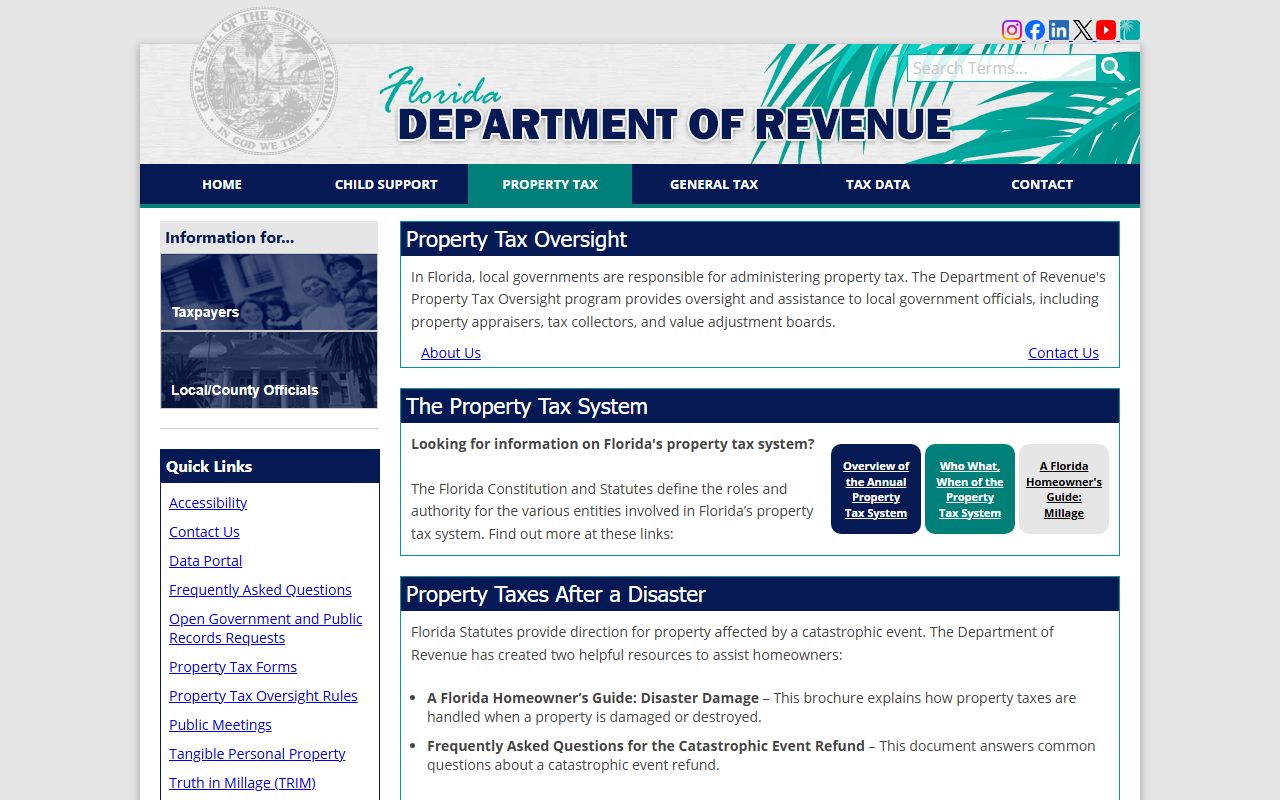
Florida DOR sets the standards that the Duval County Property Appraiser must follow for all Jacksonville parcels.
Tax Collector
The Duval County Tax Collector is located at 231 E. Forsyth Street, Room 130, Jacksonville, FL 32202. The phone number is (904) 630-1916. The Tax Collector's website handles billing, payment, and enforcement for all Jacksonville property taxes. Note that the Tax Collector and Property Appraiser share the same building but operate as separate offices with different functions.
Tax bills go out in November each year. Pay in November to get a 4% discount off the face amount. The discount drops to 3% in December, 2% in January, and 1% in February. Taxes paid after March 31 are delinquent and subject to additional costs. The process for delinquent taxes - including tax certificate sales and eventual tax deeds - is set out in Chapter 197, Florida Statutes.
The Tax Collector's office also offers a quarterly installment plan. If you enroll before May 1, you can pay in four installments throughout the year rather than one lump sum in the fall. This is helpful for property owners on fixed incomes or those who prefer to spread costs evenly. Contact the collector's office directly to enroll.
Duval County also has a property fraud alert service through the Duval Clerk of Courts. This free service notifies property owners by email when a document affecting their property is recorded. It is a useful safeguard against deed fraud and unauthorized transfers.
How to Search Jacksonville Property Tax Records
The fastest way to find Jacksonville property tax records is through the Duval County property search tool. Enter a street address, owner name, or parcel ID. The result shows the full parcel record including assessed value, taxable value, exemptions, and sales history. The search is free and requires no login.
For billing and payment information, use the Tax Collector's separate lookup tool at the collector's website. This system shows the current amount due, the payment history, and whether a tax certificate has been issued on the property. You need the parcel ID or property address to search.
The Florida DOR maintains a statewide property tax data portal where researchers can download county-level summary data. For most Jacksonville residents, the county-level search tools are sufficient. But investors or researchers who want bulk data will find the DOR portal useful.
All Jacksonville property tax records are public under Chapter 119, Florida Statutes. You do not need to be a Florida resident to access them. You do not need to give a reason. The only data withheld is certain personal information - like Social Security numbers on exemption applications - that Florida law specifically protects.
In-person requests are also accepted at the offices on Forsyth Street. Staff can pull records, answer questions about specific parcels, and provide printed copies. There may be a small fee for printed or certified copies, but viewing records on-screen is free.
The Florida DOR contact page helps you reach the right office when you need state-level guidance on Jacksonville property tax questions.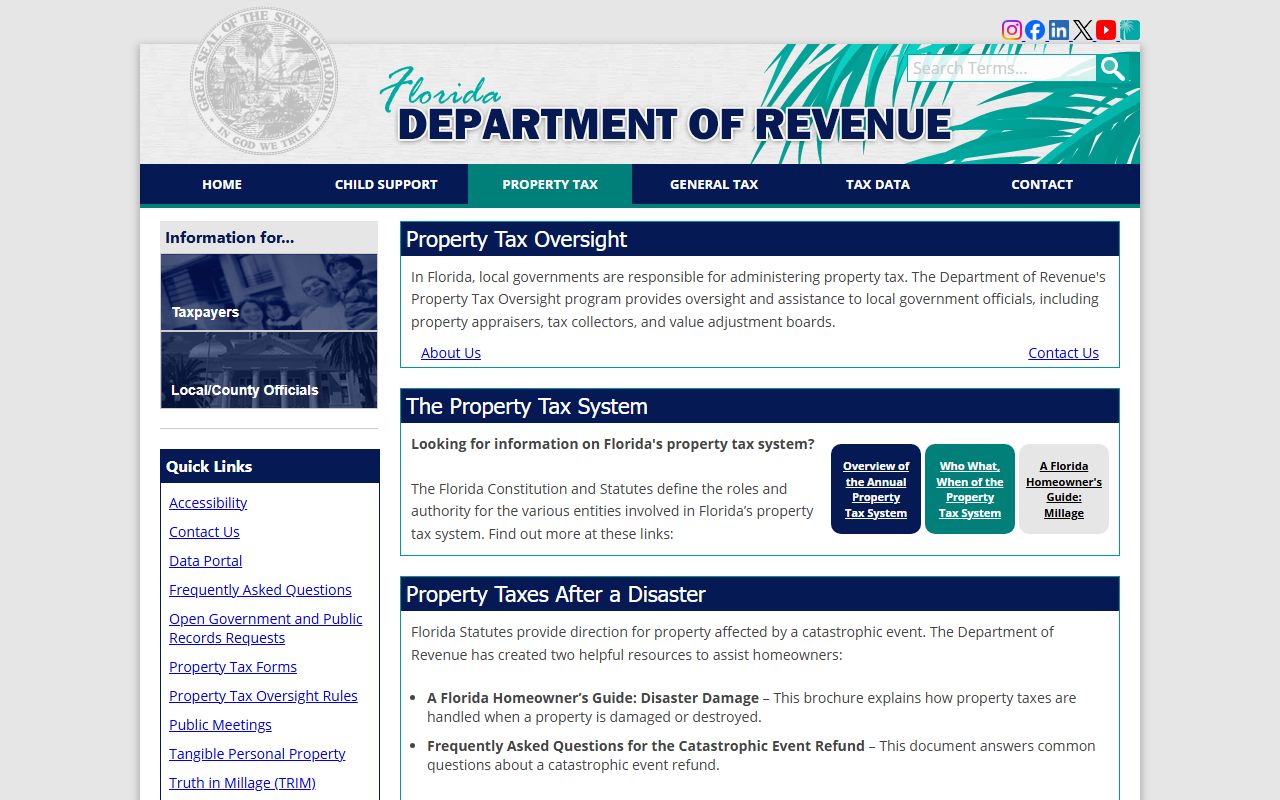
When county offices can't answer a question, the state DOR contact page points you to the right resource.
Exemptions Available in Jacksonville
Florida offers a range of exemptions that reduce the taxable value on Jacksonville properties. The homestead exemption is the most common. It cuts up to $50,000 off the assessed value of a primary residence. The first $25,000 applies to all taxing authorities. The second $25,000 covers the value between $50,000 and $75,000 and applies to all taxing authorities except schools. Exemption rules are set out in Chapter 196, Florida Statutes.
Homestead also activates the Save Our Homes cap. Under this cap, the assessed value of a homesteaded property can increase by no more than 3% per year, or the rate of inflation - whichever is less. Over time, this creates a gap between the property's market value and its assessed value, which can cut the tax bill significantly. The cap follows the owner, not the property, and resets on sale.
Other exemptions in Jacksonville include: senior exemption for low-income residents over 65, additional homestead for seniors on fixed incomes, veteran disability exemptions, total disability exemptions, and surviving spouse exemptions. Some require annual renewal. All applications go to the Duval County Property Appraiser's office. The deadline for most exemptions is March 1. Late applications are generally denied for the current year.
Tangible personal property used in a business gets an automatic $25,000 exemption each year. Business owners must file a TPP return with the appraiser by April 1 to qualify. The exemption applies to each location separately. If you own more than one business location in Jacksonville, you file a return for each and get the exemption on each.
VAB Appeals in Jacksonville
If you disagree with your assessed value, you can file a petition with the Duval County Value Adjustment Board. The TRIM notice mailed each summer triggers the 25-day window to file. The TRIM shows your proposed assessed value and what your taxes will look like at that value. If you think the number is too high, file a petition before the deadline shown on the notice.
The VAB is an independent body. It includes members of the county commission, school board, and appointed citizens. Petitions are heard by a special magistrate who reviews the evidence from both sides. The magistrate then makes a recommendation to the board. The board votes to accept or reject it. If you lose at the VAB level, you can still file suit in circuit court. VAB procedures are governed by Chapter 194, Florida Statutes.
To build a strong case, gather comparable sales from nearby properties sold in the same timeframe. Photos of condition issues help. An independent appraisal is the strongest evidence. You do not need an attorney for a VAB petition, but complex commercial cases often benefit from professional representation. Pay the undisputed portion of your tax bill during the appeal to avoid additional penalties.
Payment Options
Jacksonville property taxes can be paid online through the Duval County Tax Collector's website. The portal accepts credit cards and electronic checks. In-person payment is available at the office on Forsyth Street as well as at branch locations across the city. The quarterly installment plan is another option for owners who prefer to pay in stages rather than all at once in November.
Taxes left unpaid after March 31 become delinquent. The collector holds a tax certificate sale in June where investors bid on delinquent parcels. The winning bidder pays the back taxes and earns interest. The property owner can redeem the certificate by paying the investor back. If no redemption happens within two years, the investor can apply for a tax deed - a process that can ultimately result in the property being sold. This makes timely payment important.
Property owners who face hardship may qualify for a deferral program. Florida law allows certain low-income senior homeowners to defer taxes until the property is sold or transferred. Ask the Tax Collector's office whether you qualify.